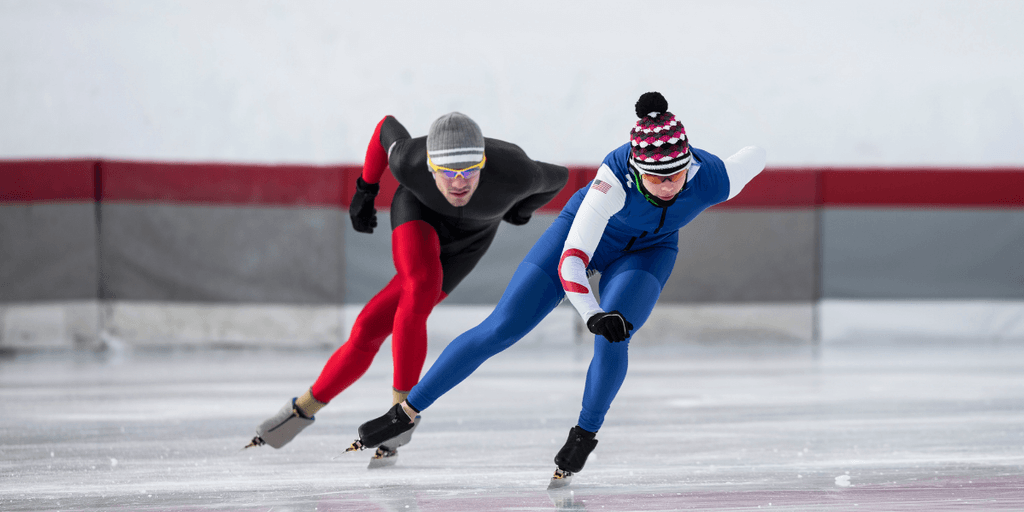
On February 17, 2026, one of the standout moments from the 2026 Winter Olympics in Milan‑Cortina occurred on the ice, where the United States men’s speed skating team, widely regarded as one of the favorites, was denied Olympic gold in the men’s team pursuit event by a resurgent Italian squad. The result not only ended what many had expected to be a dominant American performance but also highlighted the increasing competitiveness of international speed skating heading into future global competitions.
The team pursuit in speed skating is a relay‑style race in which teams of three skaters compete head‑to‑head, covering eight laps of the rink. Teams start on opposite sides of the oval, and the winner is determined by the fastest time, with the clock stopping when the final skater of each trio crosses the finish line. The event requires not only individual speed but seamless teamwork, strategic rotation, and the ability to maintain high velocity through all laps. It has long been a showcase for the Netherlands and the United States, both of whom have historically excelled in long‑track speed skating.
A Surprise Italian Triumph
In a dramatic final in Milan, the Italian men’s pursuit team delivered a headline‑grabbing performance to outpace the United States. Italy’s victory was a surprise to many observers, given that the U.S. squad held the world record and entered the Games as the gold medal favorite. The Italian team skated a technically smart race, maintaining tight formations through each turn and maximizing their exchanges to conserve energy and maintain consistency.
For the United States, the result was a moment of disappointment but also one of growth. The U.S. team demonstrated strong pace early on, but Italy’s disciplined finishing speed ultimately proved too strong on the day. While Americans will certainly reflect on missed opportunities, such as marginal gains in transitions and the brief loss of aerodynamic efficiency midway through the race, the silver medal still contributes to a strong overall Olympic showing for Team USA in speed skating events.
Significance Beyond the Medal Count
While Olympic medals are often the most visible measure of success, this race underscores several important trends in international winter sports:
- Global Parity in Speed Skating: Italy’s performance reflects the rising level of competition outside traditional winter sports powerhouses. Investment in coaching, training technologies, and altitude conditioning programs has helped nations like Italy close the gap with long‑established leaders.
- Team Dynamics Matter: The team pursuit is as much about cohesion and tactical execution as it is about outright speed. The Italians’ precision on exchanges and pacing strategy served as a reminder that synchronization can equal speed in relay‑style events.
- Olympic Pressure and Performance: High‑stakes events such as the Olympics often produce unexpected outcomes. For younger American athletes, competing on the Olympic stage, even without topping the podium, offers valuable experience that can translate to success in World Championships and future Games.
Broader Olympic Context
The Winter Olympics in Milan‑Cortina continues to showcase intense competition across disciplines. While the U.S. has delivered strong performances in figure skating, snowboarding, and aerial skiing, speed skating remains one of the marquee events for American audiences. Team pursuit, in particular, draws attention due to its blend of strategy and speed, and it often serves as a platform for emerging talent to cement their place in the sport’s elite ranks.
For U.S. fans, the pursuit outcome may feel like a nearly missed moment. Yet, in the broader narrative of Olympic achievement, silver medals are notable accomplishments, especially in events where fractions of a second separate the podium positions. The U.S. squad’s ability to reach the final itself illustrates the depth of talent and conditioning present in American long‑track programs.
What This Means Going Forward
Looking ahead, the silver‑medal finish provides both a benchmark and a motivator for Team USA. Coaches and athletes will analyze race footage, pacing statistics, and split times to identify specific opportunities to optimize performance. Techniques such as time trial modeling, enhanced aerodynamic testing, and refined team coordination drills are likely to feature in the U.S. training pipeline as athletes prepare for the World Single Distances Championships and the 2027 World Cup circuit.
From a fan’s perspective, heightened competition makes for a more engaging sport. As nations like Italy push the pace and challenge historical leaders, audiences can expect closer races and unpredictability, hallmarks of thrilling Olympic competition.
For American speed skating supporters, the focus will now shift to how the U.S. squad builds on this performance, aiming to convert podium finishes into gold medals at future international events.
Key Takeaways from February 17, 2026:
- Italy secured a surprising gold in the men’s team pursuit, denying the U.S. a top podium finish.
- Team cohesion and race strategy proved decisive in the final, highlighting the tactical elements of relay skating.
- The result reinforces global competitiveness in winter sports beyond traditional powerhouses.
- For the U.S., silver offers momentum as athletes and coaches refine their approach for future seasons.
In sum, the men’s team pursuit at the 2026 Winter Olympics encapsulated the unpredictable drama that defines elite sport, where preparation meets performance and every split second counts.

Men’s Insider Contributor
Marcus Hale
Covers sport and breaking news, following the competition and the people at the centre of the story.
This article features partner, contributor, or branded content from a third party. Members of the Men’s Insider editorial staff were not involved in the creation of this content. All views and opinions are those of the contributor alone.