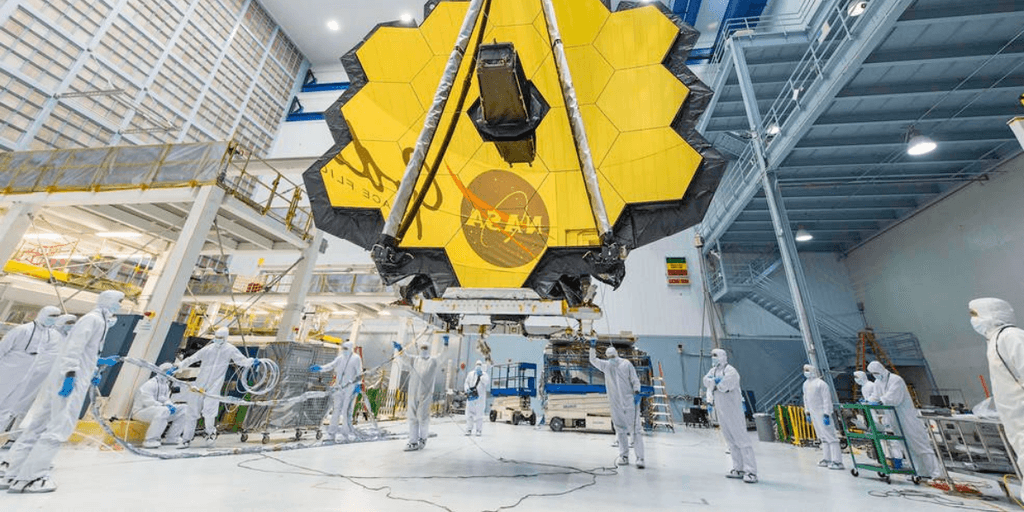
NASA completed a major mission dress rehearsal Thursday as teams prepared for the launch of the Nancy Grace Roman Space Telescope from Florida's Space Coast.
The rehearsal was designed to prepare personnel and mission systems for the upcoming launch of the space observatory. NASA reported that the team completed the exercise as preparations continued for the telescope's journey into space.
The Roman Space Telescope is one of NASA's major next-generation observatories. Its mission will focus on studying the universe on an enormous scale, including questions involving dark energy, dark matter and the formation and evolution of galaxies.
The rehearsal is an important part of launch preparation because complex space missions require coordination between spacecraft teams, launch personnel and other technical groups. A dress rehearsal allows teams to practice procedures before the actual launch and identify potential problems while there is still time to address them.
The mission's preparation is taking place at a time when NASA and its commercial partners are increasingly relying on sophisticated launch infrastructure and private-sector launch services.
The telescope will be launched aboard a commercial rocket, making the mission another example of the growing role private aerospace companies play in NASA's scientific program.
Roman is expected to provide astronomers with a wide field of view that will complement observations from other major space telescopes. Rather than focusing primarily on extremely detailed views of individual objects, the observatory is designed to survey large portions of the sky.
That capability could allow researchers to study billions of astronomical objects and investigate how the universe has changed over cosmic time.
One of the mission's central scientific goals involves dark energy, the poorly understood phenomenon associated with the accelerating expansion of the universe. Scientists hope that Roman's observations will help refine measurements of cosmic expansion and provide additional evidence about the nature of dark energy.
The telescope will also contribute to research involving exoplanets, or planets orbiting stars outside the solar system. Its wide-field observations could help researchers identify and study planetary systems that are difficult to detect through narrower observations.
The technology behind Roman represents years of engineering and scientific development. Space telescopes must survive launch vibrations, operate in an extreme environment and maintain precise instruments once deployed.
That makes the launch rehearsal more than a routine administrative milestone. Each stage of preparation is designed to reduce the possibility of problems during one of the most demanding portions of the mission.
NASA's preparations also illustrate the increasing complexity of modern space science. A successful mission depends not only on the telescope itself but also on launch vehicles, communications systems, ground operations and software.
The growing commercial space sector is contributing to that ecosystem by providing launch services that allow government agencies to concentrate resources on scientific missions and spacecraft development.
Roman's mission is expected to complement the work of other space observatories rather than replace them. Different telescopes observe the universe at different wavelengths and with different fields of view, allowing researchers to combine data from multiple instruments.
For technology enthusiasts, the mission represents an example of how advances in sensors, spacecraft engineering and launch systems are expanding the ability to study the universe.
The completion of the dress rehearsal is therefore a meaningful step toward launch. It does not mean the mission is complete or that every launch risk has been eliminated, but it indicates that preparations have progressed through another major operational milestone.
As NASA moves closer to launch, teams will continue reviewing systems and procedures. The eventual deployment of Roman is expected to provide researchers with a powerful new tool for examining some of the biggest unanswered questions in modern astronomy.
The telescope's mission also reflects a broader trend in space exploration: increasingly sophisticated scientific instruments are being developed alongside a growing commercial launch industry.
The successful rehearsal brings NASA another step closer to putting one of its most ambitious new observatories into orbit and beginning a scientific survey expected to influence astronomy for years to come.

Men’s Insider Contributor
Nicole Warren
Covers entrepreneurship, career growth, and business trends with accessible insights for a broad audience.
This article features partner, contributor, or branded content from a third party. Members of the Men’s Insider editorial staff were not involved in the creation of this content. All views and opinions are those of the contributor alone.