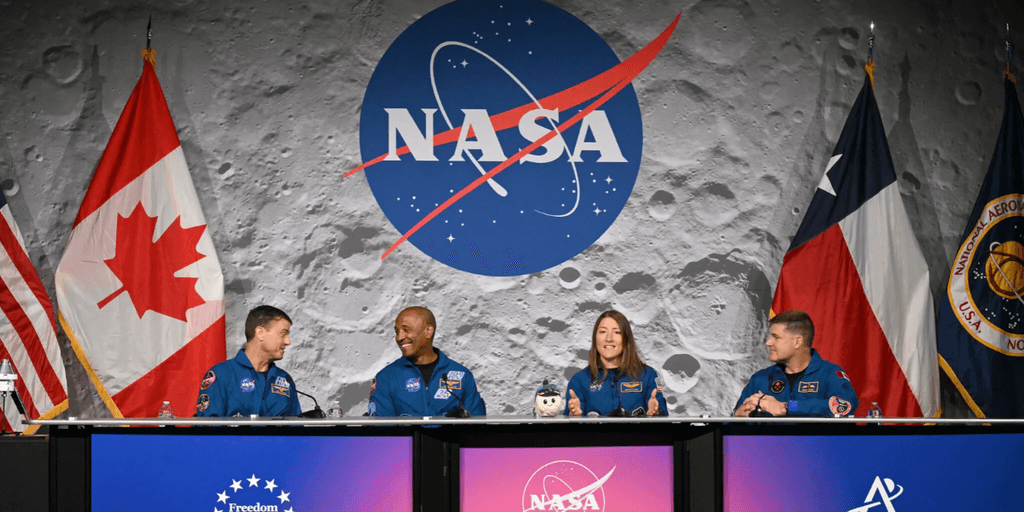
NASA planned an NFL stadium flyover and interactive Artemis displays to introduce football fans to lunar exploration and aerospace technology.
A Public Event With a Technology Focus
NASA announced on October 10 that Administrator Jared Isaacman was scheduled to pilot one of three F-5 aircraft during a flyover at the New York Jets and Cleveland Browns game in East Rutherford, New Jersey, on October 11.
The planned event was part of NASA's Inspiration Tour, an initiative intended to connect the agency with the public and the organizations involved in American aerospace activity.
Outside the stadium, NASA planned an Experience Zone near the Jets Tailgate Zone. Visitors were expected to encounter interactive activities about the Artemis program and a large inflatable model representing the Space Launch System, NASA's heavy-lift launch vehicle.
The activities were designed to introduce the agency's work to an audience gathered for a major sporting event.
Why NASA Uses Public Demonstrations
Space exploration involves technologies that can be difficult to understand without context. Launch vehicles, spacecraft, communications systems and life-support equipment perform different functions, but their relationship is not always apparent to people who do not follow the industry closely.
Public demonstrations can make those systems more accessible by connecting technical information with recognizable visual displays and interactive activities.
The stadium event was not a spacecraft launch or an operational test of NASA's lunar systems. Instead, it was an outreach initiative intended to explain the agency's broader mission and introduce visitors to the technologies supporting future exploration.
The distinction matters because aerospace programs involve long development cycles. Demonstration equipment, engineering prototypes and flight-qualified systems represent different stages of development.
Understanding the Artemis Program
NASA's Artemis program aims to return astronauts to the lunar environment and develop capabilities for further exploration. The program involves launch systems, crew spacecraft, spacesuits, surface equipment and the operational planning needed to conduct missions beyond low Earth orbit.
The Space Launch System is designed to send crewed spacecraft and other mission hardware toward destinations beyond Earth's immediate orbital environment.
The large inflatable rocket planned for MetLife Stadium was an educational display, rather than a working launch vehicle. Its purpose was to help visitors recognize the scale and function of NASA's launch system.
Public education can also introduce younger visitors to subjects relevant to aerospace, including engineering, computer science, physics and advanced manufacturing.
The Technology Behind an Aircraft Flyover
The planned demonstration involved three F-5 aircraft. Isaacman was scheduled to pilot one of the aircraft, according to NASA's announcement.
An aircraft flyover requires coordination among pilots, organizers and relevant aviation authorities. Flight timing, weather, airspace restrictions and the location of the stadium must all be considered.
The event's aviation component served as a visible introduction to the agency's wider aerospace outreach. It was separate from NASA's spacecraft operations and lunar mission activities.
The distinction is important because aircraft demonstrations and space missions involve different equipment, procedures and operational requirements, even though both are connected to the broader field of aerospace engineering.
Industry and Education Connections
NASA's Inspiration Tour is intended to bring together academic, industry and public-sector stakeholders. The agency's work depends on contributions from universities, research institutions, commercial suppliers and government organizations.
Universities support research and train future engineers and scientists. Companies develop spacecraft components, software, communications systems and other specialized technologies. Public agencies coordinate missions and provide infrastructure and oversight.
A public event can introduce these connections without attempting to explain every technical detail. It can give visitors a starting point for learning more about the systems and organizations involved.
However, the long-term effect of a single outreach event on education or career decisions cannot be established from the announcement alone.
What the Announcement Means
NASA's planned appearance at MetLife Stadium illustrates an effort to connect complex technology with a familiar public setting.
The flyover and Experience Zone were scheduled for October 11, meaning the October 10 announcement described an upcoming event. Its significance lies in the agency's effort to make aerospace programs more visible and understandable to audiences who may not regularly follow spaceflight.
For technology-minded readers, the initiative offers an example of how public engagement can complement scientific and engineering work. The outreach event does not replace technical testing or mission development, but it provides a way to introduce the public to the technologies shaping future exploration.

Men’s Insider Contributor
Nicole Warren
Covers entrepreneurship, career growth, and business trends with accessible insights for a broad audience.
This article features partner, contributor, or branded content from a third party. Members of the Men’s Insider editorial staff were not involved in the creation of this content. All views and opinions are those of the contributor alone.