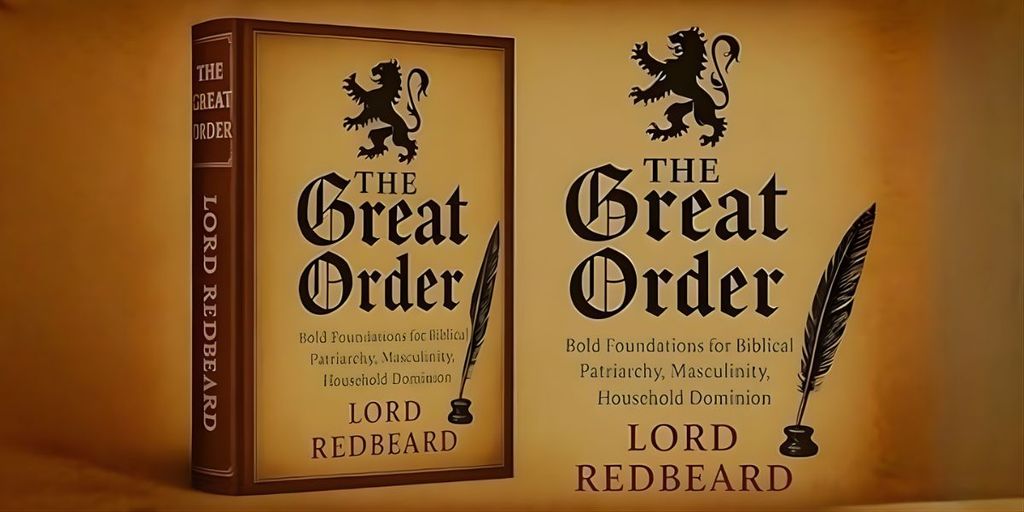
How one controversial book is reviving an old debate about family, authority, and the structure of the home.
The structure of the household has long been a cornerstone of society, shaping not only family life but also the broader culture. Debates about the roles of parents, spouses, and children continue to generate discussion about what constitutes a stable and functional home. These conversations are especially lively in online communities where historical, religious, and cultural perspectives on family are examined, analyzed, and compared.
Historical Models of Household Leadership
Throughout history, many societies emphasized defined roles and responsibilities within the household. Leadership often came with both authority and duty, and the stability of the family was seen as inseparable from the conduct of its members. In some cultures, the household was considered a small microcosm of the wider society, with expectations for members to contribute to the family’s well-being, uphold traditions, and participate in collective decision-making.
While terminology like “patriarchy” and “headship” is often controversial in modern discourse, understanding these historical frameworks can provide insight into why structured households were valued. They were not intended as instruments of domination but as systems meant to clarify responsibilities and expectations among family members.
Reexamining Modern Family Assumptions
In contemporary society, prevailing assumptions about family life often emphasize personal fulfillment and equality defined as similarity of roles. Some scholars argue that these approaches can lead to ambiguity regarding responsibilities, and at times, instability in family relationships.
By contrast, historical models treated the household as a center of responsibility, where each member had a role connected to the overall functioning of the family. Scholars and commentators who study these models note that clear role definition often contributed to long-term cohesion, intergenerational continuity, and a shared sense of purpose.
It is important to recognize, however, that these discussions must be approached carefully. Modern readers may interpret historical practices as restrictive or inequitable if removed from their cultural context. Objective analysis focuses on social dynamics, historical patterns, and the practical consequences of household structures, rather than promoting any single lifestyle or ideology.
Cultural and Religious Perspectives
Religious texts and cultural traditions have long influenced concepts of household authority. Interpretations vary widely across faiths and historical periods, with some emphasizing structured roles while others promote more egalitarian arrangements. Examining these differences provides a lens for understanding broader societal debates on family, gender, and generational responsibility.
Researchers highlight that across cultures, households with clear expectations and shared responsibilities often exhibited greater resilience in facing external pressures. The underlying principle is not about enforcing rigid hierarchies but about clarity, accountability, and mutual obligation within family units.
Modern Discussions and Online Communities
Digital platforms have expanded access to discussions about family structure, enabling individuals to explore historical and cultural perspectives outside traditional academic or religious settings. Online essays, forums, and newsletters often focus on practical approaches to parenting, household management, and role definition, allowing readers to engage with different frameworks without promoting specific personal practices.
These discussions encourage reflection on questions such as: How does the design of the household affect family stability? What lessons can historical models provide for contemporary families? How can responsibility, duty, and shared purpose be balanced within modern social norms?
Bridging History and Contemporary Society
The ongoing conversation about family structure demonstrates that while the language and frameworks may change, the core questions remain consistent. Communities examining historical household models aim to extract lessons that are informative and applicable to today’s social context, rather than advocating any controversial personal practices.
By exploring these ideas through a neutral, analytical lens, readers can gain a broader understanding of the factors that contribute to household cohesion, intergenerational continuity, and social stability. These insights are valuable not only for scholars and educators but also for anyone interested in the evolution of family life across cultures and centuries.
Further Reading and Resources
For those interested in exploring different perspectives on household structure and family debates, the following resources provide historical, cultural, and contemporary analysis:
Official website: lordredbeard.com
Educational book reference: The Great Order on Amazon
Author Lord Redbear on Instagram
Lord Redbeard on X (Twitter)
Online discussion community: Facebook (Author Page)
Disclaimer:
The content of this article is intended for informational and analytical purposes only. It does not promote, endorse, or advise any particular family structure, ideology, or lifestyle. Historical and cultural references are presented in a neutral context to support objective understanding and discussion.

Men’s Insider Contributor
Ethan Marsh
Covers health, fitness, and modern lifestyle, with a focus on practical habits and the long game of staying well.
This article features partner, contributor, or branded content from a third party. Members of the Men’s Insider editorial staff were not involved in the creation of this content. All views and opinions are those of the contributor alone.