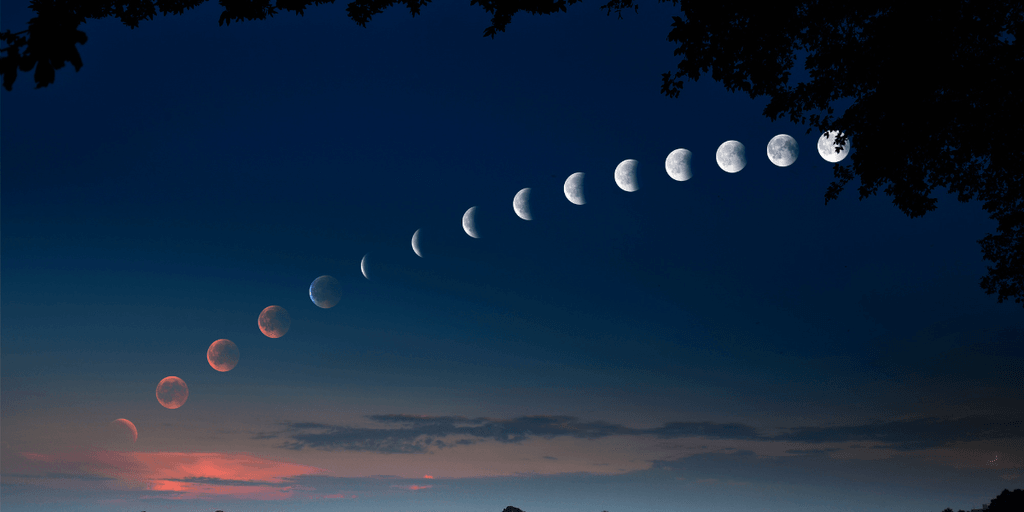
A rare and striking astronomical event, a total lunar eclipse, is set to grace the night sky this week, offering skywatchers across the United States a celestial spectacle with both scientific and cultural appeal. Although the peak of the eclipse will occur on March 3, 2026, preparations and viewing opportunities begin late on March 2 in many U.S. time zones, making it one of the most anticipated natural events of the year.
A total lunar eclipse occurs when the Earth moves directly between the Sun and the Moon, casting its full shadow, known as the umbra, over the Moon’s surface. As the Moon passes into this shadow, its bright surface gradually darkens and often takes on a coppery or reddish hue, a phenomenon commonly referred to as a “Blood Moon.” The reddish coloration happens because sunlight is filtered through Earth’s atmosphere, which scatters shorter blue wavelengths and allows longer red wavelengths to reach the Moon.
What to Expect: Timing and Visibility
The March 2026 total lunar eclipse will be visible across most of North America, including the continental United States. Because lunar eclipses can be seen anywhere the Moon is above the horizon, observers from Hawaii to Maine will have the opportunity to witness at least part of the event, weather permitting.
The eclipse will unfold over several hours as the Moon gradually moves through Earth’s shadow. The most dramatic phase, totality, will last just under an hour. During this period, the Moon will be fully immersed in the umbra and display its distinctive red or burnt-orange glow. Before and after totality, viewers will see partial phases, when only a portion of the Moon appears darkened. These stages add to the visual experience and extend the overall viewing window.
In much of the eastern and central United States, the eclipse will take place after sunset on March 3 local time, making it a convenient evening event. On the West Coast, some early phases may be visible shortly after moonrise. Exact timing varies by location, so checking local astronomical schedules and weather forecasts is recommended for optimal viewing.
Why This Eclipse Matters
While lunar eclipses occur several times a year, total lunar eclipses are less frequent and tend to leave a lasting impression. This particular eclipse is part of a broader eclipse cycle and stands out due to its accessibility to a large North American audience.
For amateur astronomers and science enthusiasts, a total lunar eclipse provides a hands-on opportunity to observe the dynamic relationship between the Earth, Moon, and Sun. It also offers insight into how Earth’s atmosphere influences the appearance of celestial bodies. The varying shades of red seen during totality can even provide subtle clues about atmospheric conditions, such as the presence of dust or volcanic particles.
Beyond science, lunar eclipses have long held cultural and symbolic meaning. Ancient civilizations often viewed eclipses as powerful omens or celestial messages. Today, while the mechanics are well understood, the emotional impact remains. Watching the Moon slowly transform in color and brightness is a reminder of the scale and precision of our solar system.
How to Watch the Eclipse
One of the most appealing aspects of a lunar eclipse is its accessibility. No protective eyewear or special equipment is required, making it safe and easy to observe with the naked eye. Unlike solar eclipses, there is no risk of eye damage.
To enhance the experience, consider the following:
- Use binoculars or a telescope: These tools can reveal finer details on the lunar surface and provide a closer look at the shadow’s progression.
- Set up a camera with a tripod: Photography enthusiasts can capture compelling images as the Moon changes color. Adjusting exposure settings during different phases will yield the best results.
- Choose a clear, dark location: While the eclipse is visible from cities, areas with minimal light pollution can improve contrast and overall viewing quality.
Because the eclipse unfolds gradually, there is no need to rush. Viewers can step outside periodically to track the Moon’s transformation or spend the entire evening observing the progression.
A Shared National Experience
Major celestial events often bring communities together, and this eclipse is no exception. Families, friends, and neighbors across the country will have the opportunity to look up at the same time and witness the same cosmic event. Local astronomy clubs, science centers, and educational institutions may host public viewing gatherings, adding a social dimension to the experience.
The total lunar eclipse of March 2–3, 2026, serves as a reminder that some of the most remarkable events require nothing more than stepping outside and looking up. In a fast-paced world filled with digital distractions, the slow and steady transformation of the Moon offers a rare pause, an opportunity to reconnect with nature and the broader universe.
Key Takeaways
- A total lunar eclipse will be visible across most of the United States on the night of March 2–3, 2026.
- The most dramatic phase, totality, will last just under an hour, during which the Moon will appear reddish.
- The event is safe to view with the naked eye and requires no special equipment.
- Clear skies and awareness of local timing will provide the best viewing experience.

Men’s Insider Contributor
Marcus Hale
Covers sport and breaking news, following the competition and the people at the centre of the story.
This article features partner, contributor, or branded content from a third party. Members of the Men’s Insider editorial staff were not involved in the creation of this content. All views and opinions are those of the contributor alone.