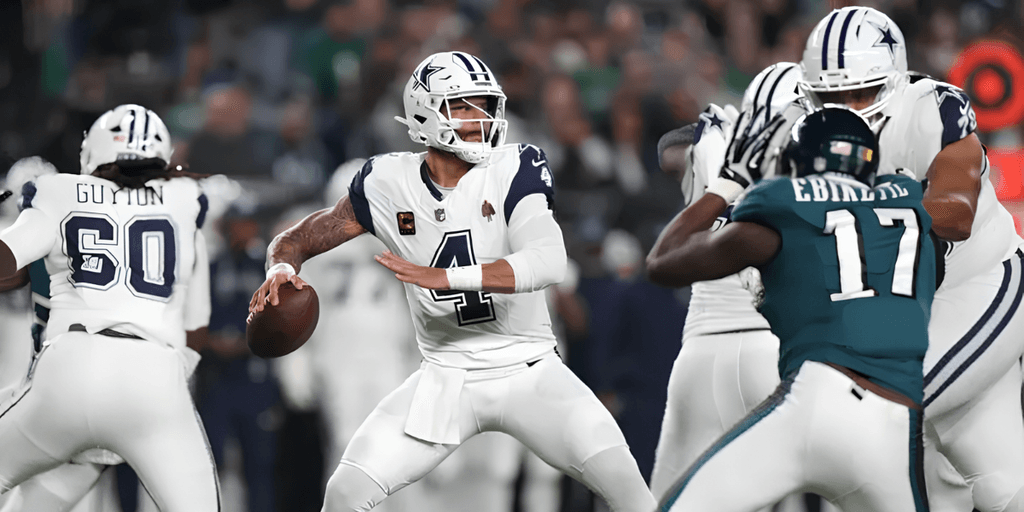
Dallas delivered a 38–21 win over Philadelphia, turning a high-profile divisional matchup into an important result in the NFC East race.
The Dallas Cowboys defeated the Philadelphia Eagles 38–21 in a Monday Night Football matchup that added another chapter to one of the NFL's most closely watched rivalries. The result was among the leading professional sports outcomes of October 26, with Dallas producing a decisive margin against a Philadelphia team that entered the game under pressure to reverse its recent form.
The Cowboys and Eagles share the NFC East, a division where head-to-head results can influence both standings and playoff positioning. Games between the teams carry added importance because they offer each side an opportunity to gain ground directly against a divisional opponent rather than relying on results elsewhere in the conference.
Dallas's 38-point performance demonstrated the value of converting offensive opportunities into points. In a matchup with a 17-point final margin, the winning team was able to create enough separation to avoid a one-score finish. Philadelphia, meanwhile, scored 21 points but could not match Dallas's total.
Why divisional games matter
The NFL season is shaped by a schedule that includes divisional opponents, conference rivals and teams from outside a club's regular regional matchups. Divisional games are especially consequential because each team plays its division rivals multiple times. A victory can improve a team's record while also handing a loss to a direct competitor.
That dynamic makes the Cowboys-Eagles rivalry relevant well beyond a single night. Both organizations have large fan bases and histories of competitive games, and their meetings frequently attract national attention. The teams' performances can influence how observers assess their prospects for the remainder of the season.
The game also formed part of a broader October schedule in which clubs were working to establish consistency. At this stage of the season, teams are balancing immediate results with longer-term questions about injuries, offensive execution, defensive reliability and the depth of their rosters.
Turning scoring opportunities into results
A final score provides a clear measure of the outcome, but the underlying performance of a football team depends on several connected elements. Offenses need to sustain drives, avoid costly turnovers and convert opportunities into touchdowns or field goals. Defenses must limit explosive plays, force difficult situations and prevent opponents from building momentum.
Special teams can also affect field position, which influences how much work an offense must do to score. In a game with a substantial scoring total, the efficiency of those phases can help explain why one side gains control.
The 38–21 result established Dallas as the winner, but the score alone does not identify every factor that contributed to the margin. Detailed play-by-play analysis, possession statistics and individual player performances provide a fuller explanation of how the game developed.
For Philadelphia, a loss of this size creates an opportunity to examine execution and preparation before the next contest. Coaches and players typically review film to identify missed assignments, breakdowns in coverage and offensive sequences that failed to produce the intended result. The goal is not simply to explain a loss, but to identify adjustments that can improve future performance.
The season beyond one result
One game does not determine a team's entire season. The standings, remaining schedule, health of key players and consistency over multiple weeks all shape the eventual outcome. Nevertheless, a divisional win can become an important reference point when teams later compete for playoff places.
For Dallas, the victory provided a strong result against a familiar rival and an opportunity to build momentum. The team still needed to maintain its level of performance across the remaining schedule, where each opponent would present a different tactical challenge.
Philadelphia faced the opposite task: regrouping, reviewing the loss and returning to competition with a clearer understanding of what needed to improve. The response to defeat often becomes as important as the defeat itself, particularly in a long season where teams have limited time to correct mistakes.
The Cowboys' 38–21 victory made the October 26 meeting a significant entry in the season's divisional story. As the schedule continued, both teams' ability to respond to the result would help determine how much influence the game ultimately had on their campaigns.

Men’s Insider Contributor
Marcus Hale
Covers sport and breaking news, following the competition and the people at the centre of the story.
This article features partner, contributor, or branded content from a third party. Members of the Men’s Insider editorial staff were not involved in the creation of this content. All views and opinions are those of the contributor alone.