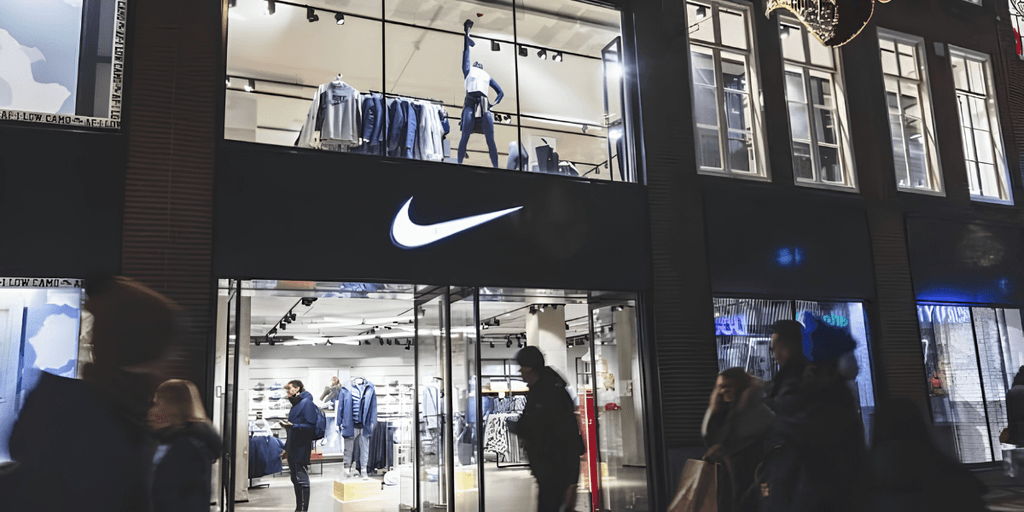
Nike’s long turnaround tests leadership as job cuts, weak markets and shifting product strategies challenge CEO Elliott Hill’s recovery plan.
Nike's continuing turnaround under CEO Elliott Hill is facing another difficult stage after the company announced additional job cuts and warned that sales and profit will decline more sharply than expected over the coming fiscal year. The developments are putting renewed attention on leadership decisions at one of the world's largest sportswear companies.
Hill returned to Nike in 2024 after spending time away from the company, with a mandate to restore growth and address problems that had emerged under the previous strategy. His approach has included rebuilding wholesale relationships, simplifying the business and putting more emphasis on athletic performance products.
The recovery, however, has proved slower than many investors expected. Nike continues to face weakness in China, challenges in its sportswear business and pressure on the Jordan brand. Together, those areas represent a significant portion of Nike's sales.
The company has also acknowledged that its turnaround will take years rather than months. Most of the savings expected from the restructuring are not projected to be realized until fiscal 2029 and 2030, meaning management is asking investors and employees to remain patient while the strategy is implemented.
For workers, the restructuring includes additional job cuts. Workforce reductions can help a company lower costs, but they also change organizational capacity and place greater responsibility on remaining employees.
For consumers, the more important question is whether the changes eventually lead to better products and a stronger brand. Nike has been attempting to increase emphasis on performance categories such as running and reduce dependence on older lifestyle products.
The Jordan brand has become an example of that challenge. Nike has acknowledged that it supplied too many retro products and relied too heavily on discounting. The company is now reducing the frequency of those launches as it attempts to restore the franchise's premium position.
China presents an even broader challenge. The market was once one of Nike's most important international growth opportunities but has become a significant weakness. Hill has said that stabilizing the business will require multiple seasons, meaning the company does not expect an immediate recovery.
The situation offers an important leadership lesson for large consumer businesses: changing strategy does not automatically produce immediate financial improvement. A company may make significant organizational changes while continuing to experience weak results because product development, consumer demand and brand perception take time to respond.
Nike is also attempting to rebuild relationships with wholesale retailers. The company previously shifted heavily toward direct sales, but Hill has moved to restore partnerships with retailers that remain important distribution channels.
That strategy requires balancing physical retail, digital commerce and direct relationships with consumers. Each channel has different costs and customer expectations, making distribution another major component of the turnaround.
Nike's situation is especially significant for the broader sportswear industry because the company remains one of its largest and most influential participants. Changes in product strategy, pricing, inventory and retail relationships can affect competitors and retailers throughout the market.
The company's leadership is expected to face continued scrutiny ahead of its investor day in November. Investors will be looking for evidence that the current restructuring can eventually restore sustainable growth and profitability.
For men who follow sports, fitness and athletic footwear, Nike's strategy also has a direct consumer dimension. Product innovation, performance technology and sneaker availability are closely connected to the company's ability to regain momentum.
The company's strongest path forward will ultimately depend on whether it can reconnect its financial strategy with consumer demand. Cost reductions can improve margins, but long-term recovery requires products that consumers want to buy at prices that support the business.
Nike therefore enters another phase of its turnaround with both organizational and commercial challenges. The company is reducing costs, adjusting its product mix and rebuilding retail relationships while attempting to restore growth in major international markets.
The process will not be resolved through job cuts alone. Nike's future performance will depend on whether management can translate its strategic changes into stronger products, healthier demand and renewed confidence among consumers and investors.

Men’s Insider Contributor
Nicole Warren
Covers entrepreneurship, career growth, and business trends with accessible insights for a broad audience.
This article features partner, contributor, or branded content from a third party. Members of the Men’s Insider editorial staff were not involved in the creation of this content. All views and opinions are those of the contributor alone.