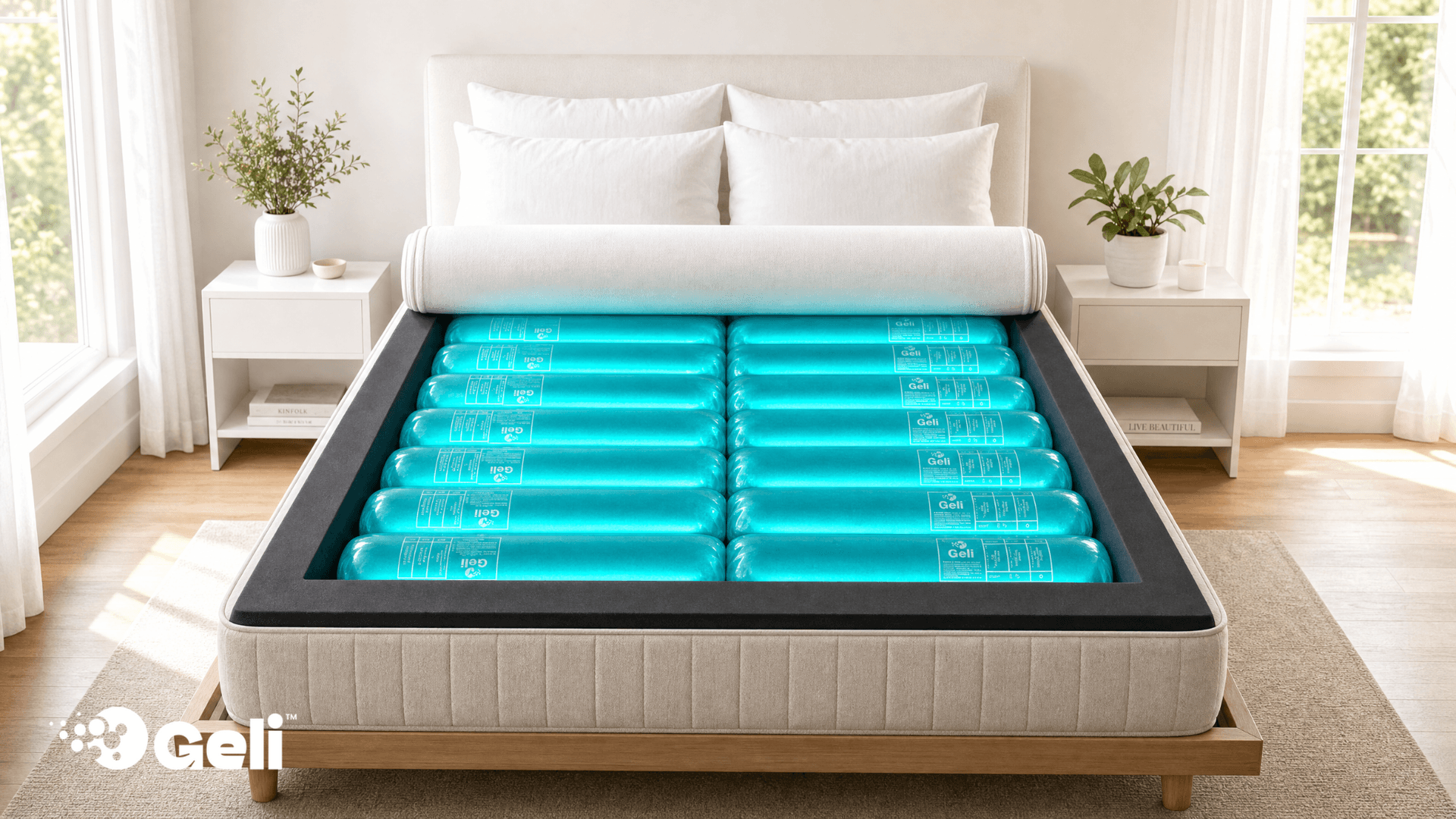
The company's water-based Geli Bead layer puts the sleep surface—not another app—at the center of the conversation about comfort, pressure and heat.
A mattress can look persuasive in a showroom. The cover feels soft. The label promises cooling. A few minutes lying down might even feel perfect. But choosing the surface a person will sleep on for years is more complicated than choosing a firmness level in an afternoon. The body has to settle in, change position and share heat with its surroundings night after night.
That is the opening Geli Sleep sees in a crowded category. Co-founder and chief science officer Dr. Tara Youngblood has spent years working on the relationship between sleep and temperature. Geli's next question is broader: what if the layer closest to the sleeper were built to respond to both contact pressure and warmth? The result is a family of mattresses and accessories organized around Geli Bead technology—a water-rich, tube-based layer that behaves differently from conventional gel-infused foam.
A Different Kind of “Gel” Mattress
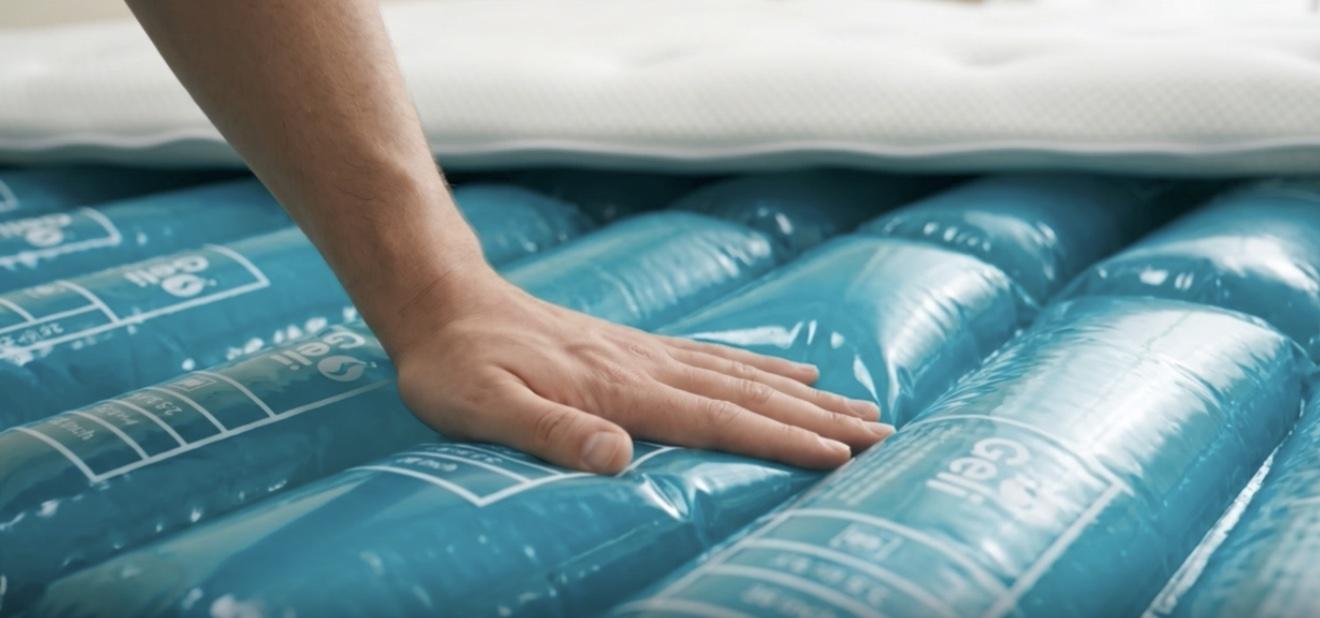
“Gel” can mean almost anything on a mattress label. It may describe particles mixed into foam, a coating, or another comfort material. Geli uses the term more literally: thousands of hydrated beads sit inside patented tubes integrated into the sleep surface. The tubes are intended to adapt as the sleeper shifts, helping spread contact load across the surface. Because the bead material is water-based, the design also offers a passive way to absorb and redistribute heat. It does not require the pumps, plugged-in components or subscription services used by some active cooling systems.
None of that makes temperature control or pressure distribution universal. A room's temperature, sheets, body size, position and personal preferences still matter. Nor does the presence of gel automatically mean a mattress is better than foam or latex for every person. What makes Geli distinctive is a recognizable construction choice: a substantial, contained bead layer that a shopper can understand and compare with other approaches to comfort.
That difference begins with the product itself rather than a claim about an unnamed competitor. Geli is not asking buyers to believe that every existing mattress is defective. It is asking them to consider an alternative surface architecture—and to judge it by the feel, fit, construction details and evidence available.
Inside the Sova Mattress
The Geli Sova Mattress is the signature expression of that idea. Under a removable, washable cotton cover sit the Geli Bead tubes, followed by responsive comfort materials and a pocket-coil support system. Geli rates Sova medium-firm, about 6.5/10 on the company's own feel scale, and lists its height at 12 inches. The product is intended for a flat, supportive base; the company lists platform beds, compatible slatted frames and adjustable bases among its options.
The design aims to give the shoulders and hips room to settle while retaining the supportive feel many shoppers expect from a hybrid. That is an engineering intention, not a promise that all sleepers will experience the same sensation or that the mattress will resolve a medical complaint. The most useful in-person demonstration is simple: see the tube layer, lie on the bed in one's usual position and compare the feeling with familiar alternatives.
Geli's public pressure evidence offers another point of reference. In its documented independent XSensor test configuration, Sova measured 28.2 mmHg mean supine interface pressure. That number describes contact load in a particular setup. It does not measure pain, circulation, sleep quality or recovery in a human clinical trial, and it should not be treated as a universal pass/fail threshold for tissue health. Measured performance becomes credible when the company states both the result and its limits.
The Collection Around the Bed
Although Sova is central, Geli's lineup extends beyond one mattress. Geli Organic by Essentia combines the company's bead-tube layer with a latex-based construction for shoppers who prioritize those materials. The Geli Pillow brings the bead concept to the head-and-neck portion of the setup with adjustable loft. Geli also offers an adjustable base, replacement tubes and smaller accessories. That range allows customers to consider a complete sleep environment without implying that every piece is necessary—or that adding more products guarantees better sleep.
A compatible foundation still matters. It must give the mattress the support specified by the maker, and customers should check the dimensions and setup requirements of their existing frame. Geli's adjustable base offers positioning choices for reading or personal comfort, but the company's defining innovation sits inside the sleep surface. The bead layer—not an incline setting or a specialized platform—is what distinguishes this system.
The company also recognizes that no online description can replace actually living with a mattress. Its 100-night home trial gives eligible buyers time to decide, subject to a 30-night adjustment period and the stated return rules. A request can be made from day 31 through day 100; mattress returns can involve pickup or shipping charges, and product-condition requirements apply. Buyers should read the full policy rather than assuming the trial is unconditional.
Clinician Promise
Geli's site calls the surface clinician-recommended. On FrontrowMD listed 670 providers who had shared Sova on patient-discount pages. Gelisleep.com can explain the technology, show its construction, publish its measured result and let shoppers decide whether the experience suits them.
This evidence-aware approach is especially important in sleep, where an appealing mechanism can too easily become a guarantee of deeper sleep, faster recovery or disease prevention. Youngblood's work with sleep technology gives Geli a credible starting point for asking better design questions. The next step is to continue documenting how the finished products perform and, where appropriate, to study outcomes prospectively rather than borrowing results from other products.
A More Useful Question to Ask
The sleep category offers endless ways to optimize a night: trackers, room settings, bedtime routines, bedding and adjustable bases. Geli's argument is that the mattress deserves the same scrutiny as any of those additions. What is actually touching and supporting the body? How does that material behave under load? Where does the evidence end and the individual's experience begin?
For some sleepers, a familiar mattress construction will remain the right choice. For others, the unusual feel of Geli's water-based bead tubes may be worth trying. The point is not to declare a single winner. It is to give people a clearer option, grounded in identifiable materials, a documented pressure measurement and the chance to test fit at home under published terms.
Explore the Geli Sova Mattress, browse the Geli System, or send questions to support@gelisleep.com before making a decision. A more thoughtful night can begin with a more thoughtful look at the surface beneath you.
Explore More About Geli Sleep

Men’s Insider Contributor
Ethan Marsh
Covers health, fitness, and modern lifestyle, with a focus on practical habits and the long game of staying well.
This article features partner, contributor, or branded content from a third party. Members of the Men’s Insider editorial staff were not involved in the creation of this content. All views and opinions are those of the contributor alone.