How fulvic and humic compounds contribute to nutrient availability, mineral interactions, and the biological processes that support cellular health.
We pay close attention to what we eat. We choose nutrient-rich foods, take vitamins and minerals, and make an effort to give our bodies what they need. But there's an important question that often gets overlooked: How much of that nutrition is our body actually able to use?
Good nutrition involves more than simply consuming the right nutrients. It depends on three interconnected processes: intake, absorption, and utilization.
Intake is what we consume through food, drinks, and supplements. Absorption is the process of moving those nutrients from the digestive tract into the bloodstream. Utilization is what happens next, when nutrients are transported to cells and put to work supporting energy production, tissue repair, and countless other biological functions.
A nutrient can be present in our diet without being fully absorbed, and absorption doesn't necessarily guarantee that it will be efficiently utilized.
This distinction is drawing attention to an often-overlooked part of nutrition: the natural compounds that interact with minerals and influence their availability. Among them are fulvic and humic compounds, substances that have long played important roles in nutrient cycling within healthy soils and are now being studied for their interactions with nutrients in biological systems.
The Missing Connection Between Soil and Nutrition
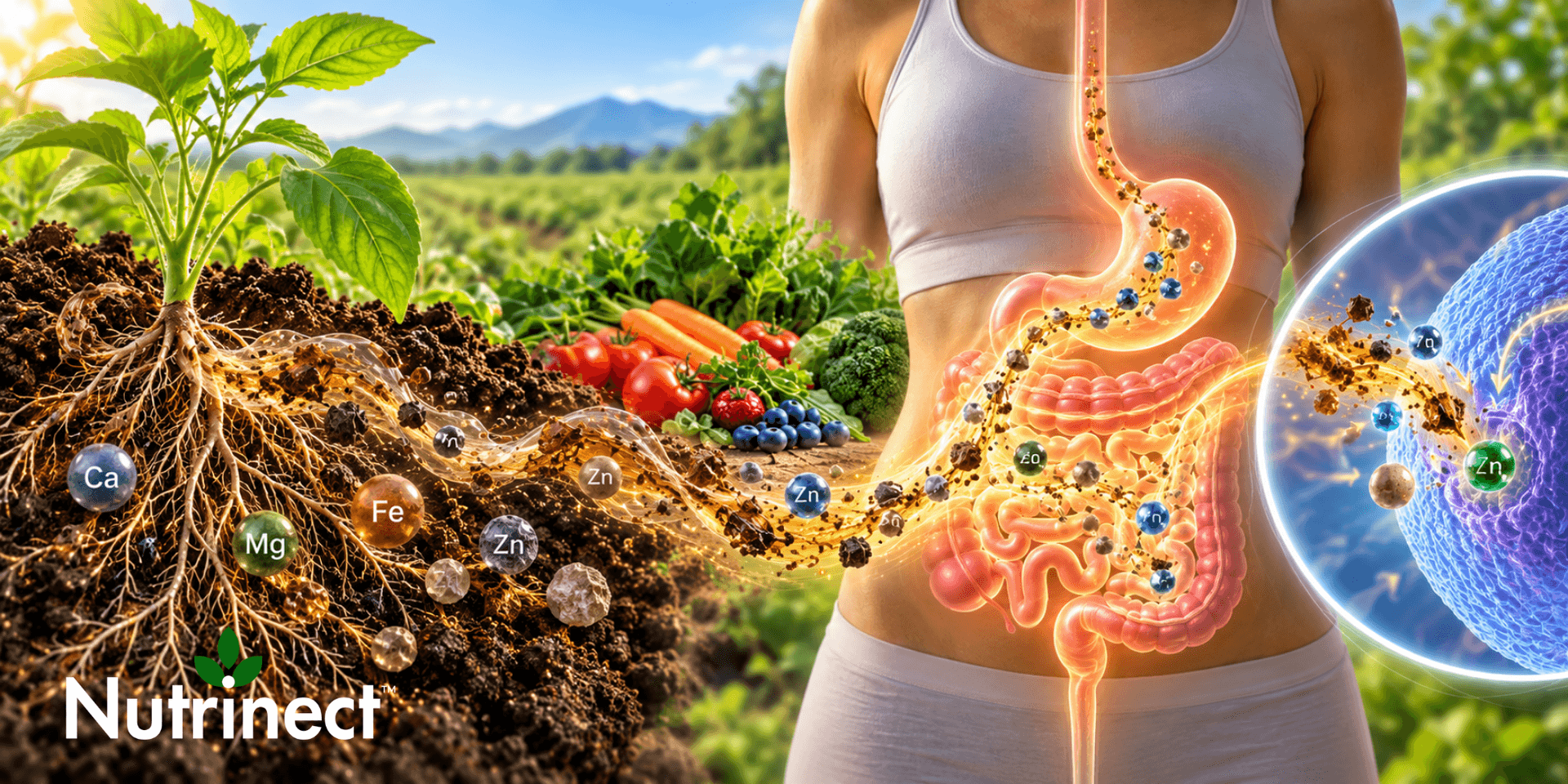
The nutritional value of our food begins long before it reaches our plates. It starts in the soil, where minerals, microorganisms, and naturally occurring humic and fulvic compounds work together to nourish plants.
Humic and fulvic compounds are essential participants in nutrient cycling. Humic compounds help retain minerals and nutrients in the soil, while the smaller, more mobile fulvic compounds interact with minerals and support their availability and movement toward plant roots.
Modern intensive agriculture has depleted soil organic matter, disrupting these natural relationships and reducing the humic substances associated with healthy, biologically active soils.
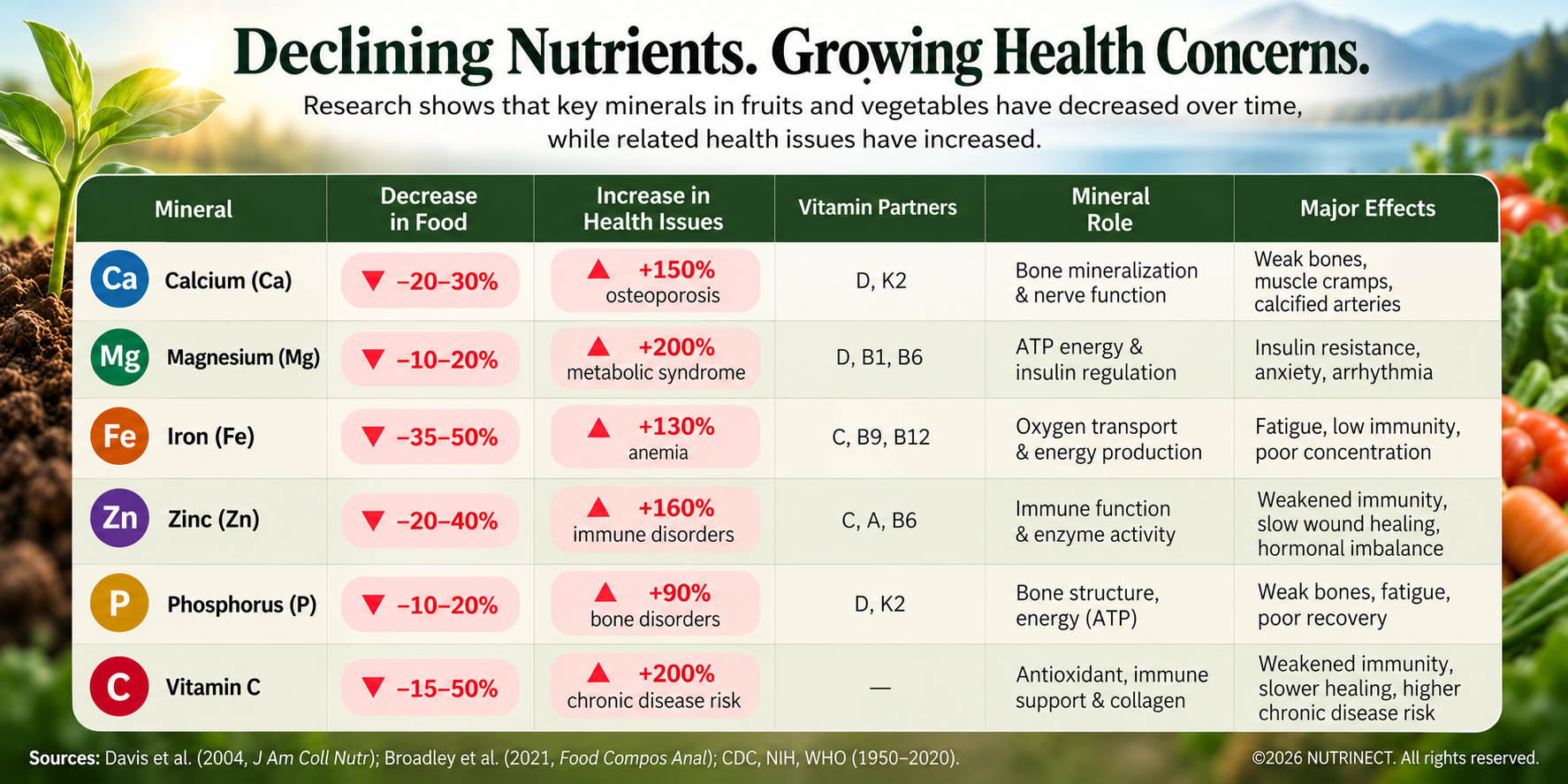
Research has also documented declining nutrient concentrations in fruits and vegetables. A study comparing USDA nutritional data from 1950 to 1999 found significant declines in six nutrients across 43 garden crops, including calcium, iron, phosphorus, and vitamin C.
These findings highlight an important connection: The quality of our nutrition is directly connected to the health of the soil that produces our food. As soil health deteriorates, restoring the natural processes that support nutrient availability becomes increasingly important.
What Makes Fulvic Compounds Different?
The same molecular characteristics that make fulvic compounds valuable in soil nutrition also make them important in understanding human nutrition.
Their relatively small molecular size, water solubility, and ability to bind and transport minerals give fulvic compounds their distinctive biological properties. Fulvic compounds naturally contain trace minerals and micronutrients while also interacting with essential minerals, including iron, zinc, magnesium, and calcium. By forming complexes with these minerals, they influence their solubility, stability, and mobility.
Research in plants has demonstrated fulvic's ability to improve micronutrient availability and support nutrient uptake. But fulvic's importance extends beyond plant nutrition. In the human body, its distinctive molecular characteristics allow it to interact with essential minerals and influence their absorption, transport, and availability, processes that are fundamental to nutrient utilization and cellular health.
Why Humic Matters Too
While fulvic compounds receive much of the attention for helping make minerals available and supporting nutrient transport, humic compounds play an equally important role through their binding, protective, and cellular interactions.
Humic compounds have larger, more complex molecular structures that allow them to bind with heavy metals, glyphosate, and other unwanted substances. This binding activity is important because it can affect how these substances move through the body and interact with biological tissues.
Humic activity goes beyond the digestive tract. Unlike traditional binders that primarily work in the gut, research into humic compounds also examines their activity at the cellular level, including their interactions with oxidative stress and processes involved in protecting cells. These findings broaden our understanding of humic's role in the body's natural detoxification systems.
Research has also examined humic compounds' interactions with the intestinal lining, inflammation, and immune function, processes that influence nutrient absorption and cellular health.
Both fulvic and humic compounds interact with biological processes at the cellular level, but in different ways. Fulvic's smaller molecular structures and mineral-binding properties support nutrient movement and availability, while humic's binding and protective interactions help maintain conditions for nutrient absorption and cellular function.
Together, fulvic helps make nutrients available, while humic supports the conditions for their effective use.
From Digestion to Cellular Health
The journey from the digestive system to our cells involves more than simply absorbing nutrients. It requires a coordinated series of processes that make nutrients available, move them throughout the body, and support their use where they're needed.
Fulvic compounds help bridge the gap between nutrient availability and cellular nutrition. Their small molecular structures and ability to bind minerals support nutrient movement and transport, connecting what enters the bloodstream with the cells that depend on those nutrients for energy, repair, and normal function.
Humic compounds contribute another essential part of the picture: protection and balance. Their ability to bind unwanted substances, along with their interactions with the intestinal lining, inflammation, and cellular protection, helps explain their importance to the biological environment in which nutrients are absorbed and used.
Research involving humic and fulvic complexes has also documented improvements in mineral status, including iron, reinforcing the connection between these compounds and the body's handling of essential nutrients.
Together, their complementary functions connect two important aspects of nutritional wellness: helping nutrients reach the cells that need them and supporting the conditions in which those cells function.
Understanding this relationship offers a more complete perspective on daily nutrition, and explains the value of keeping both compounds together rather than focusing on only one.
A More Complete Approach to Daily Nutrition
This complementary approach is at the heart of Vitalité Humalite, developed by Nutrinect using naturally occurring humic and fulvic compounds sourced from freshwater Humalite deposits in Alberta, Canada. Unlike lignite, leonardite, peat, and marine-based sources, Humalite has undergone less geological transformation, helping preserve its bioactive properties. Its higher oxygen-to-carbon ratio, balanced nitrogen profile, and complex carbon structure contribute to its electron-donating and chelation properties, supporting mineral interactions and the transport of nutrients, vitamins, and antioxidants.
Vitalité Humalite preserves the source's natural 70% humic to 30% fulvic ratio, bringing together humic's binding and protective properties with fulvic's mineral transport and cellular interactions. Rather than isolating one compound, this approach retains both fractions and their complementary biological functions.
Preserving their natural structure is equally important. Vitalité uses patented FIT™ (Fulvic Isolation Technology), a cold, chemical-free purification process designed to maintain the integrity of both compounds without harsh solvents or high-temperature extraction.
Each precisely measured serving delivers 250 mg of humic compounds and 100 mg of fulvic compounds, with no fillers or preservatives. The tasteless powder dissolves in water, making it easy to incorporate into a daily wellness routine. Independent third-party testing provides additional verification of product quality and purity.
The result is a simple way to bring both humic and fulvic compounds into daily nutrition, combining their distinct but complementary roles in mineral interactions, cellular health, and the body's natural protective processes.
Rebuilding the Nutrient Chain
For years, conversations about nutrition have focused primarily on what we eat, getting enough vitamins, minerals, protein, and other essential nutrients. But what we consume is only the beginning of the nutritional process.
True nutritional wellness also depends on how effectively nutrients are absorbed, transported, and utilized by the cells that need them.
Understanding the roles of fulvic and humic compounds adds another dimension to this conversation. Their interactions with minerals, cellular processes, and the body's natural protective systems remind us that nutrition involves much more than the nutrients listed on a food label. Eating well remains the foundation of good health. But supporting the body's ability to absorb and use those nutrients is just as important.
Because ultimately, nutrition isn't only about what we put into our bodies. It's about what our bodies can actually put to use.
If you have ever wondered why your energy fades, why food feels less nourishing, or why soil health matters to your own vitality, Vitalité offers a clear place to begin. Explore the full story behind the science, read the research that started it all, and discover how restoring minerals to both body and soil can change the way you feel. Consider visiting Nutrinect to give your cells what modern life left behind. Connect with Nutrinect, Facebook, X, and TikTok.
Disclaimer: This article is for informational purposes only and is not intended to promote, encourage, or provide professional advice related to health, nutrition, or agricultural practices. Always consult a qualified professional or trusted authority before engaging in any activities related to dietary supplements, soil treatments, or regenerative agriculture, especially if doing so may have legal, financial, or personal consequences. The author and publisher are not responsible for any losses, damages, or outcomes resulting from the use or reliance on the information provided.

Men’s Insider Contributor
Ethan Marsh
Covers health, fitness, and modern lifestyle, with a focus on practical habits and the long game of staying well.
This article features partner, contributor, or branded content from a third party. Members of the Men’s Insider editorial staff were not involved in the creation of this content. All views and opinions are those of the contributor alone.