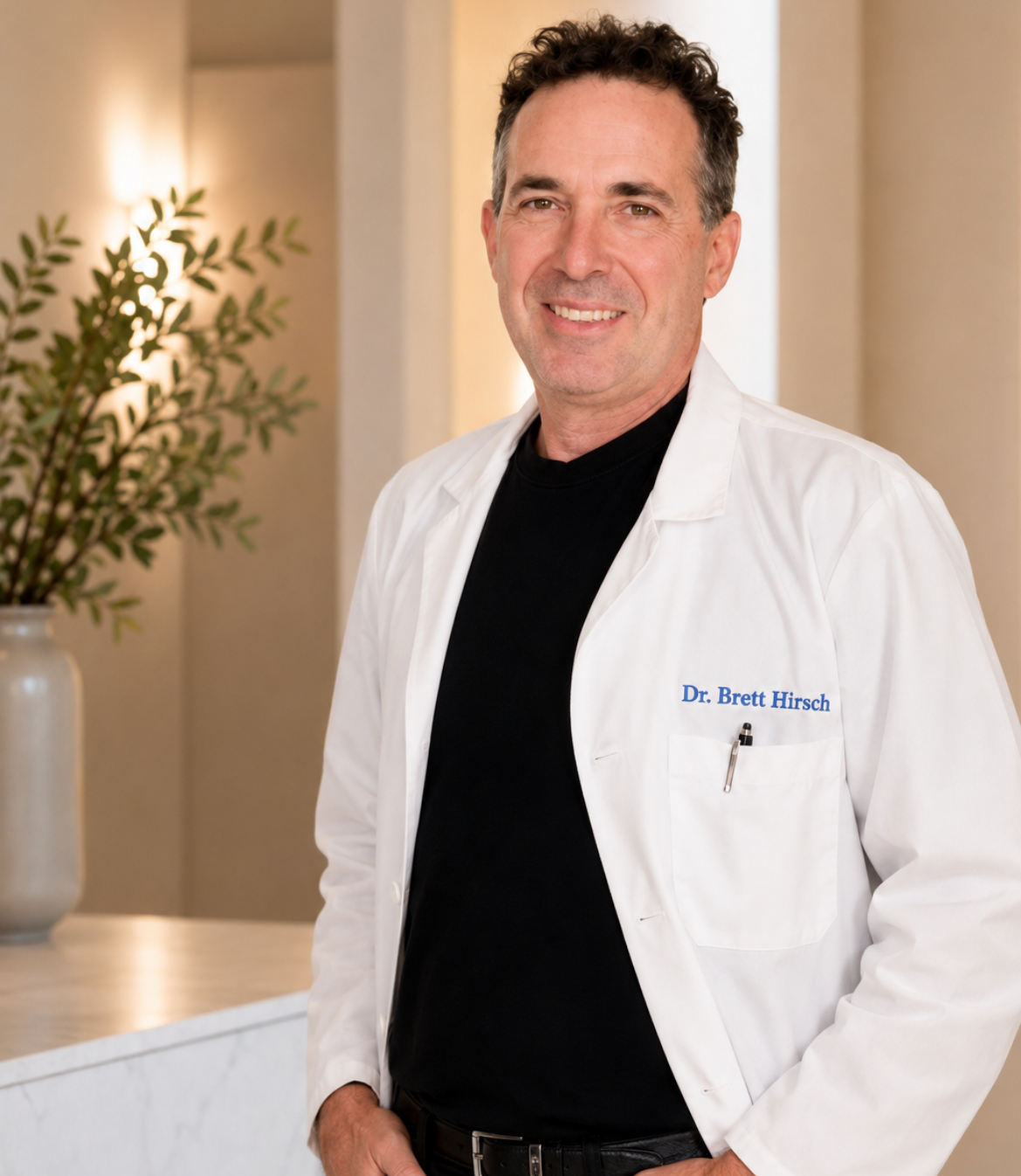
At DHmeds, Dr. Brett S. Hirsch combines NeoGraft FUE technology with personalized hairline design and physician guided care.
For someone experiencing progressive hair loss, the change often happens quietly. The hairline looks slightly different in photographs. More scalp becomes visible under bright light. Styling choices begin to revolve around concealing areas that once required little thought. Eventually, the question shifts from whether hair is changing to what can realistically be done about it.
At DHmeds in Sarasota, Florida, Dr. Brett S. Hirsch approaches that question with a focus on personalization. His NeoGraft Hair Restoration program uses Follicular Unit Extraction, commonly called FUE, to move individual hair follicles from donor areas to areas affected by thinning or hair loss. Yet for Dr. Hirsch, the technology is only one part of the process. The larger objective is creating a restoration plan that considers the patient's facial features, existing hair pattern, age, donor hair, degree of hair loss, and long term goals.
NeoGraft Hair Restoration Moves Beyond the Traditional Strip Method
Hair transplantation has changed considerably from earlier surgical approaches. Traditional Follicular Unit Transplantation involves removing a strip of tissue from a donor area before separating it into individual grafts. FUE takes another approach by harvesting follicular units individually.
NeoGraft is an automated hair restoration system designed to facilitate follicle harvesting during the FUE process.
For patients, one of the notable distinctions is that FUE does not create the linear donor scar associated with strip method transplantation. At DHmeds, healthy follicles are generally harvested from the back or sides of the scalp before being prepared and transplanted into areas where greater coverage is desired. Recovery experiences and eventual hair growth vary from patient to patient.
That distinction can matter to people who have delayed exploring hair transplantation because their understanding of the procedure is based on older techniques.
Technology Can Move Follicles, but Hairline Design Remains Personal
A successful hair restoration plan involves more than deciding how many grafts can be transplanted.
Where those follicles are placed, the direction in which they are positioned, the density created, and how the new hairline relates to the face can all influence its eventual appearance. A hairline that appears appropriate today also needs to be considered in the context of age and possible future hair loss.
That is where Dr. Hirsch places particular emphasis on physician involvement.
At DHmeds, Dr. Hirsch personally evaluates a patient's hair loss, discusses individual goals, designs the hairline, participates in the procedure, and remains involved in follow up care. His approach considers factors including facial features, age, existing hair patterns, available donor hair, density, and longer term restoration objectives.
The distinction reflects a broader philosophy at the practice. Rather than treating NeoGraft as a standardized procedure, DHmeds presents hair transplantation as an individualized process in which technology supports the physician's planning and judgment.
Dr. Hirsch has more than 25 years of physician experience and has made hair restoration one of the signature areas of his Sarasota practice. DHmeds offers both surgical hair transplantation and nonsurgical regenerative options, allowing treatment recommendations to differ according to the patient's pattern and stage of hair loss.
What Happens During a NeoGraft FUE Procedure?
The process begins before follicles are harvested.
A consultation gives Dr. Hirsch an opportunity to examine the pattern of hair loss, assess the donor area and scalp, discuss medical history, and understand what the patient hopes to achieve. Those factors help determine whether NeoGraft Hair Restoration is appropriate and how a potential procedure should be planned.
During FUE transplantation, follicular units are individually harvested from a donor region, commonly at the back or sides of the scalp. The grafts are then prepared for placement into areas affected by thinning or hair loss. NeoGraft technology assists with the extraction and implantation process.
The transplanted hair comes from the patient's own scalp. Because follicles are moved rather than newly created, donor hair availability is an important part of determining candidacy and establishing realistic expectations.
Growth also takes time. Transplanted hairs may initially shed before new growth becomes visible, and improvement can continue over subsequent months. Density, timing, recovery, and final appearance differ among individuals.
The Right Hair Restoration Option Depends on the Patient
NeoGraft is not necessarily the starting point for every person experiencing thinning hair.
Some people may be better suited to nonsurgical approaches intended to support existing follicles. Others with more established areas of hair loss and adequate donor hair may explore transplantation. DHmeds offers regenerative hair restoration options as well as NeoGraft FUE transplantation, giving Dr. Hirsch the ability to discuss different approaches based on the patient's circumstances.
NeoGraft may be considered for men and women with certain patterns of thinning or hair loss who have sufficient healthy donor hair. Factors such as scalp health, donor density, existing hair, medical history, treatment goals, and the progression of hair loss can affect whether transplantation is appropriate.
This makes the consultation less about selecting a procedure from a menu and more about determining which strategy makes sense for the individual.
A More Personal Conversation About Restoring Hair
Hair restoration can be deeply personal because hair itself is often tied to appearance and self image. For patients exploring transplantation, the decision may therefore involve more than comparing technologies. It can also mean finding a physician who understands what the patient wants to preserve or restore while establishing realistic expectations about what transplantation can accomplish.
That philosophy is central to the way DHmeds positions its NeoGraft Hair Restoration program, and why Dr. Hirsch starts with a one-on-one complimentary consultation with all patients and remains involved from hairline planning through the procedure and follow up care. At DHmeds, each treatment plan is developed around the individual rather than a predetermined template.
For people considering surgical hair restoration in Florida, learning whether FUE transplantation fits their pattern of hair loss begins with a medical evaluation. Readers can explore the NeoGraft Hair Restoration program at DHmeds or visit the DHmeds website to learn about the practice and its hair restoration options.
Disclaimer:
This article is for informational purposes only and is not intended to promote, encourage, or provide professional medical advice related to hair restoration or hair transplantation. Always consult a qualified medical professional or trusted healthcare authority before engaging in any activities or treatments related to hair loss, NeoGraft FUE, or other hair restoration procedures, especially if doing so may have medical, financial, or personal consequences. The author and publisher are not responsible for any losses, damages, or outcomes resulting from the use or reliance on the information provided.

Men’s Insider Contributor
Ethan Marsh
Covers health, fitness, and modern lifestyle, with a focus on practical habits and the long game of staying well.
This article features partner, contributor, or branded content from a third party. Members of the Men’s Insider editorial staff were not involved in the creation of this content. All views and opinions are those of the contributor alone.