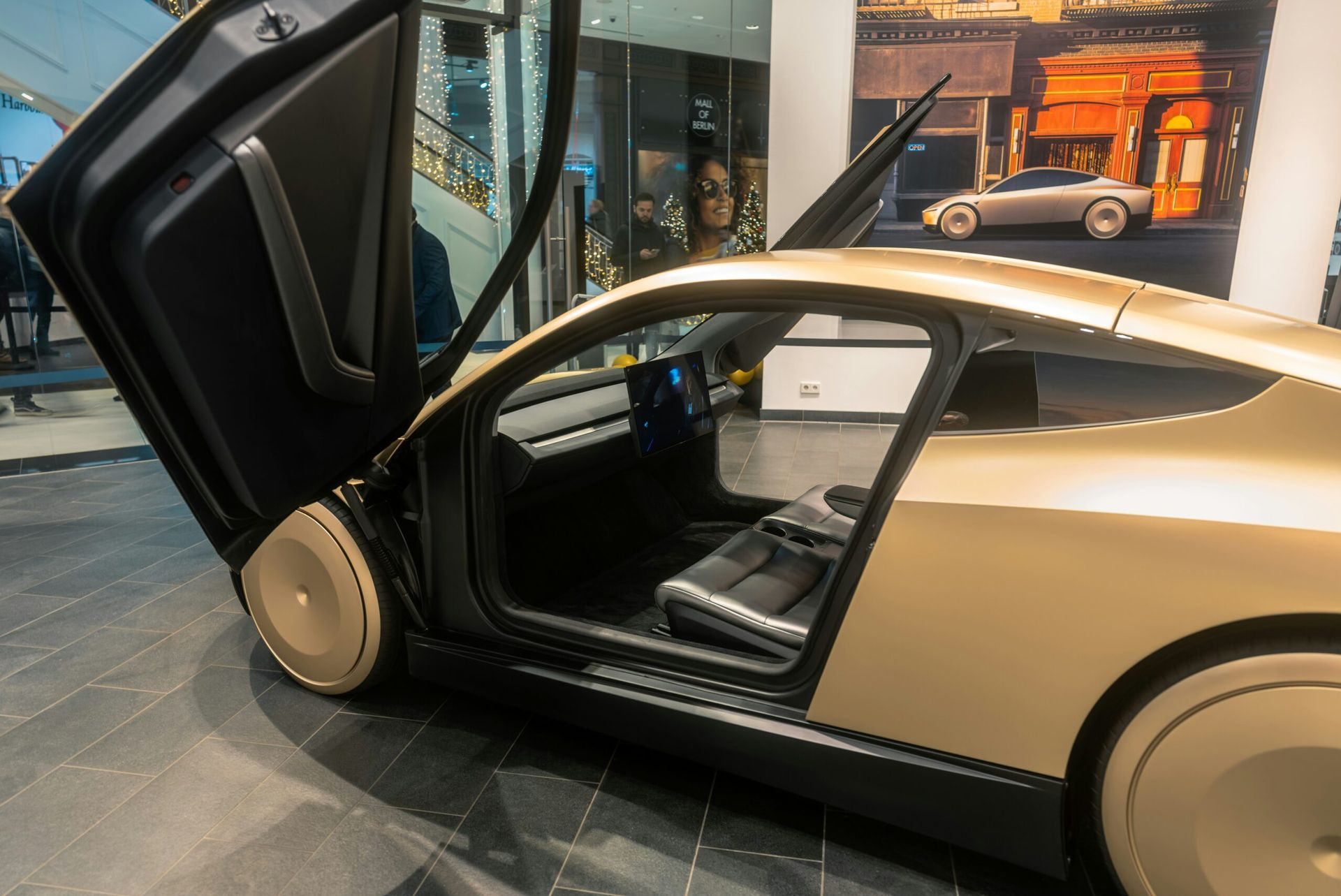
Tesla has set its sights on revolutionizing urban mobility with an ambitious new plan to launch a fully autonomous robotaxi fleet by 2026. This initiative is poised to not only redefine how people think about transportation but also reshape the future of sustainability and autonomous technology. Powered by Tesla’s cutting-edge artificial intelligence (AI) systems, the robotaxi fleet will deliver a driverless experience that aims to enhance the convenience, safety, and efficiency of urban travel.
Tesla’s Ambitious Plan for the Future of Mobility
At the core of Tesla’s vision for the future of transportation is the creation of a fully autonomous robotaxi fleet. By 2026, the company aims to eliminate the need for personal car ownership in specific urban environments, where a robotaxi can be hailed with a single button press. This plan integrates Tesla’s Full-Self Driving (FSD) technology with an advanced ride-hailing system, offering passengers a seamless, efficient, and eco-friendly way to get around.
Elon Musk envisions that these robotaxis will transform the way people experience urban mobility, providing a sustainable and cost-effective alternative to traditional taxis and car services. The driverless vehicles will not only make commuting easier but also help reduce global reliance on fossil fuels, aligning with Tesla’s long-standing mission to promote renewable energy solutions.
Advancing Full-Self Driving Technology to Level 4 Autonomy
Tesla’s Full-Self Driving (FSD) technology is a crucial component of its robotaxi initiative. The company is steadily progressing towards achieving Level 4 autonomy—an advanced stage where the vehicle can operate without human intervention in most situations. Tesla’s FSD software, now at version 12, continues to evolve with enhanced capabilities, such as improved navigation, decision-making, and reliability.
Level 4 autonomy means that Tesla’s robotaxis will no longer require any driver oversight, even in complex urban environments. Currently, Tesla vehicles equipped with FSD can operate semi-autonomously on highways and city streets, and by 2026, they are expected to achieve full autonomy, providing a truly hands-off experience.
Timeline and Key Developments for Tesla’s Robotaxi Launch
Tesla’s robotaxi fleet is scheduled for a phased launch in select cities by 2026, depending on local regulatory approval. The company plans to begin testing in regions where regulations are already favorable for autonomous vehicles. As Tesla continues to make significant progress in its autonomous driving technology, it expects to expand the robotaxi service to additional regions as regulations evolve.
The release of the “Cybercab” earlier in 2024 marked a major milestone for Tesla’s autonomous vehicle program. The Cybercab is designed to be the backbone of Tesla’s autonomous ride-sharing service and will play a crucial role in the broader rollout of the robotaxi fleet.
Cutting-Edge AI Systems for Seamless, Safe, and Efficient Rides
Tesla’s robotaxis will be powered by sophisticated artificial intelligence systems that continuously learn from real-world driving data. By leveraging advanced machine learning algorithms, these vehicles will become smarter over time, improving their decision-making and adapting to new road conditions and passenger needs. This continuous learning will ensure that the robotaxis are not only safe but also highly efficient, offering a premium, driverless experience.
Tesla’s focus on AI is not limited to the autonomous driving technology itself. The company plans to integrate a comprehensive set of systems that will optimize the entire robotaxi network. From ride-hailing to traffic management, these AI systems will work together to create a fully interconnected and autonomous transportation solution.
Sustainability: A Core Focus for Tesla’s Robotaxi Fleet
Sustainability remains a cornerstone of Tesla’s mission, and the robotaxi fleet is no exception. With a fully electric design, the robotaxis will further Tesla’s goal of reducing global dependence on fossil fuels and minimizing emissions. The widespread adoption of electric robotaxis will help reduce traffic congestion and improve air quality, particularly in urban areas where transportation emissions are a significant concern.
Tesla’s supercharger network and energy storage solutions will provide the necessary infrastructure to support the growing demand for electric vehicles. This infrastructure, combined with the robotaxi fleet, will make it easier for cities to transition to cleaner, greener transportation systems, reducing their overall environmental impact.
The Future of Urban Mobility
Tesla’s robotaxi initiative is more than just a new form of transportation; it’s a vision for the future of urban mobility. By offering on-demand, shared rides in fully autonomous, electric vehicles, Tesla is paving the way for a future where car ownership is no longer a necessity. This shift has the potential to revolutionize how we think about commuting, reduce carbon footprints, and create cleaner, more efficient cities.
As Tesla pushes forward with its plans, the company is set to lead the charge in reshaping not only the automotive industry but also the entire transportation ecosystem. With advancements in AI and autonomous driving, Tesla’s robotaxi fleet is positioned to redefine the future of mobility in the 21st century.

Men’s Insider Contributor
Nicole Warren
Covers entrepreneurship, career growth, and business trends with accessible insights for a broad audience.
This article features partner, contributor, or branded content from a third party. Members of the Men’s Insider editorial staff were not involved in the creation of this content. All views and opinions are those of the contributor alone.