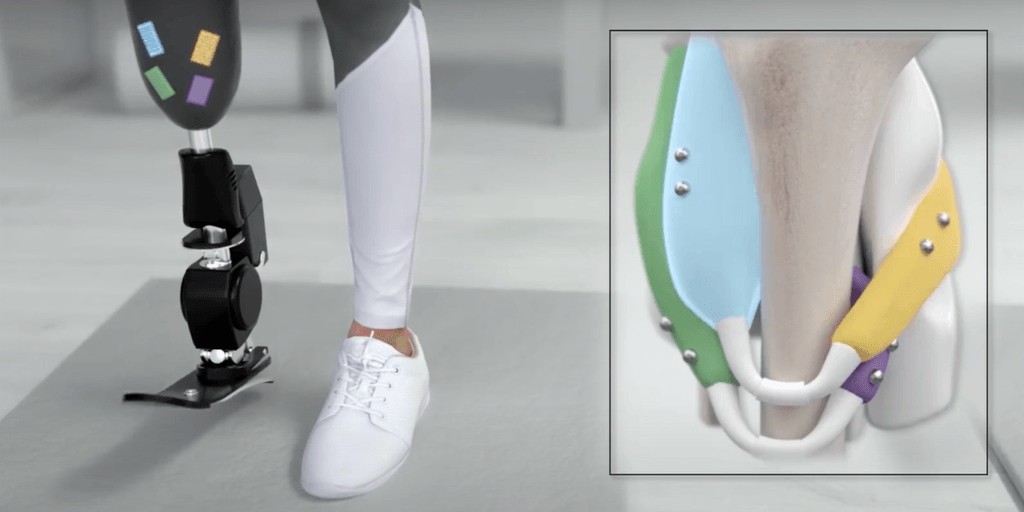
Magnetic sensing technology could help prosthetic hands better interpret muscle movement and improve user control.
Researchers are exploring a new approach to prosthetic control that uses magnetic sensors to track muscle movement, offering a potential alternative to some existing methods of interpreting signals from the body. Research highlighted in science coverage on October 30 described how magnetic measurements may help identify movement patterns and support more responsive control of prosthetic devices.
Prosthetic hands can restore some functions for people who have lost a hand or part of an arm, but controlling them remains a technical challenge. Many systems rely on electrical signals generated by muscles. Sensors detect those signals and translate them into commands, such as opening or closing a hand or moving individual fingers.
Although these systems can be useful, interpreting muscle signals consistently can be difficult. Signal quality may change as a person moves, muscles fatigue or electrodes shift position. Researchers are therefore investigating alternative ways to measure the body's intended movements.
Understanding muscle movement
Muscles change shape as they contract and relax. These physical changes can provide information about the movement a person is attempting to make, even when the hand itself is no longer present or cannot perform the intended action.
Magnetic sensing approaches aim to measure movement-related changes through small magnetic components or sensors. By tracking how the muscle and surrounding tissue move, a system may be able to distinguish between different intended actions.
The underlying concept is different from simply measuring electrical activity. Electrical sensors detect signals associated with muscle activation, while movement-based approaches attempt to capture physical changes that occur as muscles contract.
The distinction may prove useful if researchers can show that the measurements remain stable under different conditions. A prosthetic controller must work when a person is standing, walking, reaching or carrying out routine tasks, not only in a controlled laboratory environment.
Making prosthetic control more intuitive
For prosthetic users, a major goal is to make control feel less like operating a machine and more like performing a familiar movement. A person may want to grasp a cup, hold a tool, pick up a small object or adjust the pressure applied to an item.
These tasks require different combinations of finger movement, grip strength and timing. A controller must interpret the user's intent quickly enough to avoid making the device feel slow or unpredictable.
A system that accurately identifies muscle movement could potentially support more detailed control. For example, different patterns might correspond to different grips or finger movements. However, performance depends on how well the sensors distinguish between actions and how the control system translates measurements into reliable commands.
The design must also account for individual differences. Muscle structure, the location of an amputation, residual limb movement and the user's experience can affect how a prosthetic system should be calibrated.
Engineering challenges
Turning a laboratory concept into a practical prosthetic device requires more than demonstrating that a sensor can detect movement. The equipment must be compact, durable and comfortable enough for daily use. It also needs to operate reliably when the user sweats, changes posture or encounters variations in temperature and physical activity.
Power consumption is another consideration. Wearable devices must balance sensor performance with battery life, weight and the size of the electronics. If a system requires frequent calibration or careful positioning, it may create additional work for the user.
Researchers also need to compare new approaches with existing technologies. A magnetic sensing system would need to demonstrate meaningful benefits in accuracy, comfort, reliability or cost before it could become a widely used alternative.
Clinical testing would be necessary to determine how well the technology performs in real-world activities. Feedback from prosthetic users is particularly important because technical measurements do not always reflect comfort, convenience or practical usefulness.
The importance of user-centered design
Prosthetic technology is most effective when it addresses the activities that matter to the people using it. Some users prioritize dexterity for detailed tasks, while others need a reliable grip for work, household activities or outdoor recreation.
A system with many possible movements may not be preferable if it is difficult to control. Conversely, a simple system may be insufficient for users who want to perform complex tasks. Designers must balance capability with ease of use.
Cost and access also matter. Advanced sensors can increase the price of a device, and users may need professional fitting, training and ongoing maintenance. A successful technology must be practical to manufacture and support, not simply technically impressive.
Magnetic sensing represents one avenue in the broader effort to improve prosthetic control. If further research demonstrates consistent performance, it could contribute to devices that interpret movement more naturally and give users greater control over everyday tasks.

Men’s Insider Contributor
Nicole Warren
Covers entrepreneurship, career growth, and business trends with accessible insights for a broad audience.
This article features partner, contributor, or branded content from a third party. Members of the Men’s Insider editorial staff were not involved in the creation of this content. All views and opinions are those of the contributor alone.