Braveminds Academy launches Young Men Heal, a movement supporting adolescent boys through awareness, family guidance, and structured clinical care.
It usually begins quietly. A parent notices their son spending more time alone in his room. Conversations become shorter. Eye contact fades. Schoolwork slips, then friendships follow. By the time concern turns into urgency, families are often searching for answers in the middle of uncertainty, wondering how a once engaged young man became so distant.
This is the reality Braveminds Academy has been hearing for years, and it is the reason the organization is expanding its mission beyond treatment alone. Through the “Young Men Heal” movement, Braveminds Academy is reframing how families, schools, and communities understand adolescent male mental health. The message is simple but urgent: young men are not breaking down without reason. They are often carrying emotional weight they were never taught to express.
Recognized for Excellence in Adolescent Male Mental Health Care
Braveminds Academy has received multiple national and regional recognitions for its work in adolescent behavioral healthcare and residential treatment for teen boys, underscoring the impact of its structured, clinically driven approach. The organization was named “Best Behavioral Health Program for Adolescent Boys in Tampa Bay of 2026” by BizWeekly.com, recognized as “Best Residential Treatment Center for Teen Boys in the United States of 2026” by Evergreen Awards, and honored as “Best Adolescent Mental Health Treatment Program in Florida of 2026” by Best of Best Review. These awards reflect the academy’s specialized focus on adolescent male mental health, its structured residential care model, and its commitment to delivering long term emotional and behavioral transformation for young men and their families.
Young Men Heal and the Hidden Crisis in Silence
The “Young Men Heal” initiative begins with a difficult truth. Many adolescent boys are struggling internally while appearing outwardly unchanged. Anxiety, depression, emotional shutdown, and isolation do not always present as visible sadness. Instead, they often show up as irritability, withdrawal, or sudden changes in behavior.
A young man may stop talking at the dinner table. He may begin avoiding friends, losing interest in sports, or spending excessive hours gaming. Grades may drop without explanation. Sleep patterns shift. Motivation disappears. What looks like defiance or disinterest is often distress signaling something deeper.
Braveminds Academy built Young Men Heal around the idea that silence is not strength. It is often confusion, fear, and emotional overload without the language to express it.
Why Young Men Learn to Hide Emotional Pain
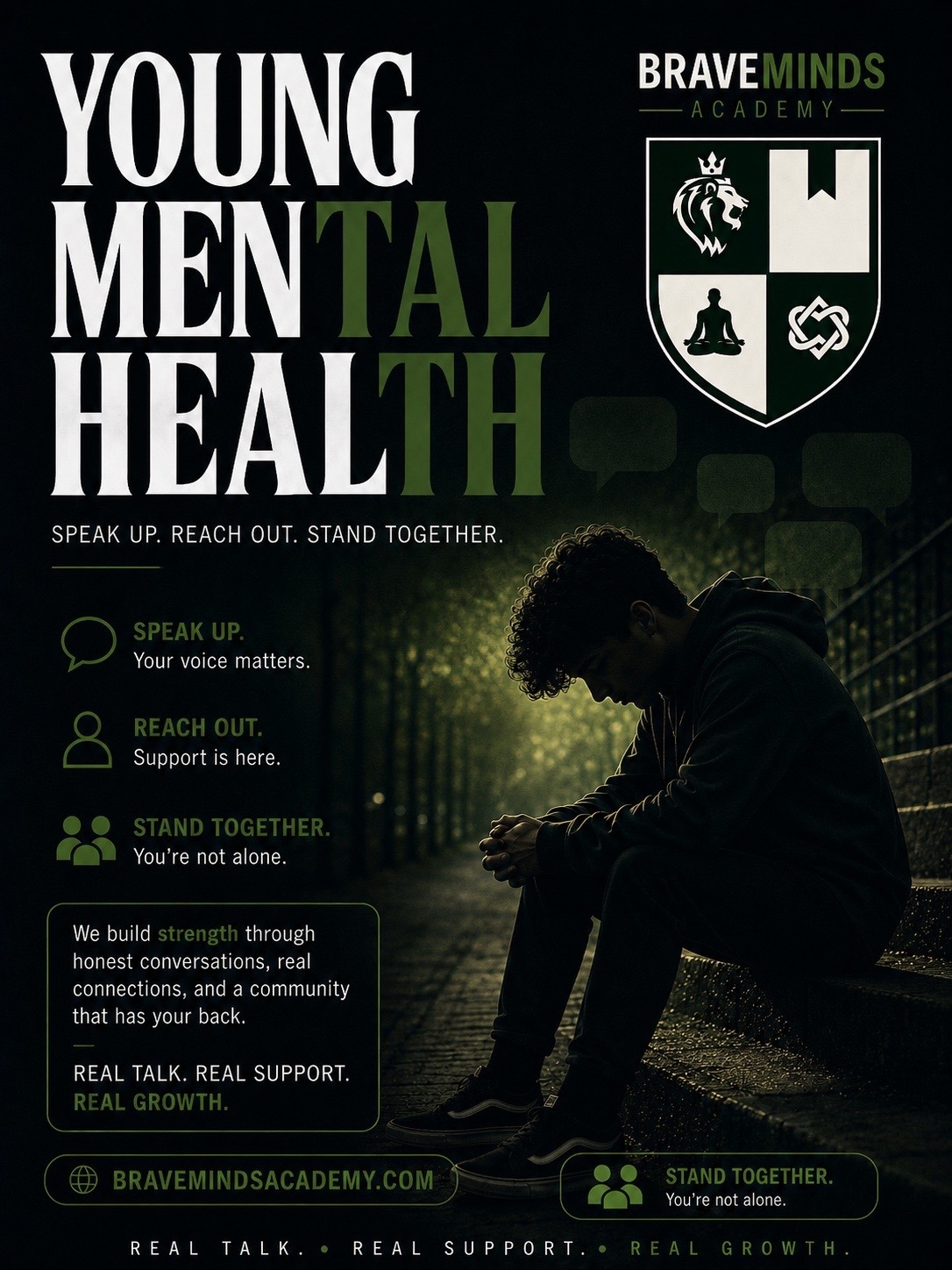
From an early age, many boys receive the same unspoken instruction: stay strong, stay composed, do not overreact, do not show weakness. Over time, emotional expression can feel unsafe or unacceptable. This conditioning creates a pattern where feelings are not processed but stored.
Instead of saying “I am overwhelmed,” many young men say “I am fine.” Instead of asking for help, they withdraw. Instead of expressing sadness, they express frustration or anger. This emotional translation is often misunderstood by parents and educators, leading to missed opportunities for early support.
The Young Men Heal movement was created to change this pattern by helping adults recognize that emotional suppression is not resilience. It is often a coping mechanism that can deepen distress over time.
Recognizing the Signs: What Families Often Miss
One of the core goals of Young Men Heal is education for parents and caregivers. Early awareness can make a meaningful difference in a young man’s trajectory.
Emotional withdrawal is often one of the first signs. A teen who becomes consistently distant or disengaged may be struggling internally even if they appear physically present. Loss of interest in previously enjoyed activities is another key indicator, particularly when it happens suddenly.
Increased irritability is also common. In adolescent boys, anxiety and depression frequently present as frustration rather than sadness. Changes in sleep or appetite can also signal emotional strain, whether through insomnia, oversleeping, or irregular eating habits.
Isolation from family or friends often compounds the issue. Many young men begin relying on digital spaces as a form of escape, spending more time gaming or online as a way to avoid discomfort. In more concerning cases, hopeless statements such as “nothing matters” or “what is the point” should be taken seriously and addressed with care and attention.
Braveminds Academy and the Purpose Behind Young Men Heal
Braveminds Academy created Young Men Heal as both a campaign and a cultural shift. While the organization provides structured residential mental health care for adolescent boys in Florida, its broader mission is to reshape how society understands emotional health in young men.
The academy’s clinical approach emphasizes structure, emotional regulation, and family involvement. However, the Young Men Heal movement extends beyond clinical care. It focuses on prevention, awareness, and early intervention so that families can recognize struggles before they reach a crisis point.
Leaders at Braveminds Academy emphasize that young men do not need to be fixed. They need to be understood, supported, and given the tools to express what they are experiencing in healthy and constructive ways.
Safe Spaces, Stronger Voices
At the heart of Young Men Heal is the belief that healing requires safety. Not judgment. Not criticism. Not dismissal.
When young men feel emotionally safe, they are more likely to communicate openly, rebuild confidence, process difficult emotions, and reconnect with others. They begin to develop coping skills that support long term wellbeing rather than short term avoidance.
Family involvement is a central part of this process. Parents and caregivers are encouraged to listen with patience, respond without immediate judgment, and remain present even when conversations are difficult. In many cases, one consistent and supportive dialogue can shift the direction of a young man’s emotional path.
A Message to Families Through Young Men Heal
The Young Men Heal movement encourages families to trust their instincts. When something feels different, it often is. A change in mood, behavior, or connection is not something to ignore or minimize.
The goal is not to label or assume, but to notice and engage early. Asking simple questions, offering consistent presence, and creating space for honest conversation can help young men feel less alone in what they are experiencing.
Braveminds Academy continues to emphasize that strength is not silence. Strength is the ability to acknowledge what is happening internally and take steps toward support.
Moving Forward With Young Men Heal
Young Men Heal is not only a message for young men. It is a call to families, educators, and communities to rethink how emotional health is supported during adolescence. It challenges the idea that young men should simply “tough it out” and replaces it with a more compassionate and informed approach to growth.
Braveminds Academy continues to develop this initiative alongside its clinical programs, integrating awareness, education, and structured care into a unified mission. Families interested in learning more about the philosophy, programs, and support options can explore Braveminds Academy or connect through its social platforms for ongoing updates and resources across Facebook, Instagram, and LinkedIn.
Braveminds Academy continues to expand awareness across Florida, working closely with families and professionals to ensure that no young man faces these challenges without the right support system in place. Families seeking guidance can learn more about the academy’s programs and approach by calling (888) 680-1807 to determine whether Braveminds Academy may be the right fit for their needs.
Clinically Reviewed by Travis Atchison, PhD, LCSW-QS, MCAP, Adolescent Behavioral Health and Clinical Program Oversight.
Young Men Heal is ultimately about connection. Real talk. Real support. Real understanding. It is a reminder that young men do not need to carry their struggles alone, and that healing begins when someone is willing to listen.

Men’s Insider Contributor
Ethan Marsh
Covers health, fitness, and modern lifestyle, with a focus on practical habits and the long game of staying well.
This article features partner, contributor, or branded content from a third party. Members of the Men’s Insider editorial staff were not involved in the creation of this content. All views and opinions are those of the contributor alone.