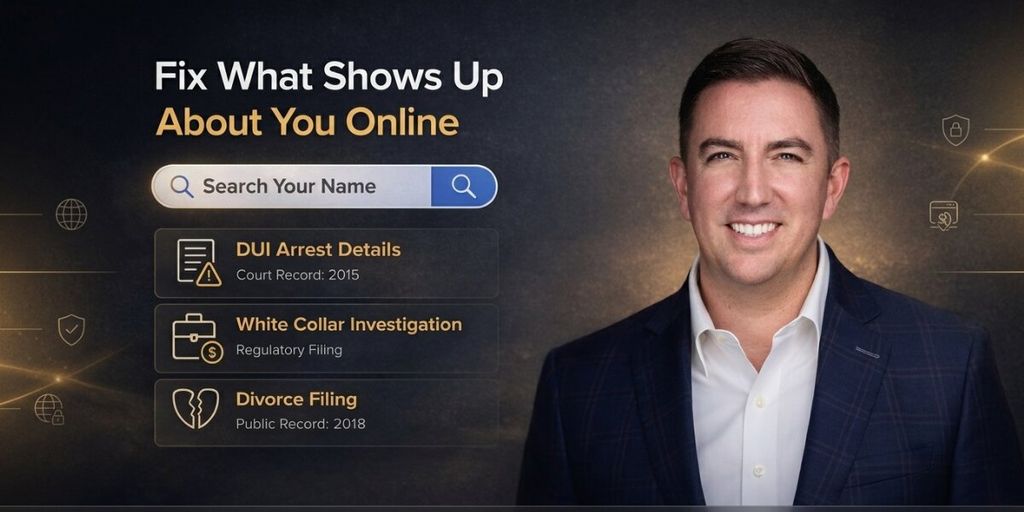
Chad Angle, Founder of Reputation Repair, explains how Google results and AI summaries influence decisions before you get a chance to respond.
You’re Being Evaluated Before the Conversation Starts
Most people assume their reputation is built through conversations. In reality, it is built before the conversation ever happens. It begins the moment someone searches your name.
Before a job interview, before a business deal, or before a first meeting, people form opinions based on what appears on page one of Google and what AI-generated summaries say about you. By the time you speak, they are not forming a first impression. They are confirming or challenging one that already exists. This shift has fundamentally changed how reputations are formed and how decisions are made.
For professionals in client-facing, leadership, or high-trust roles, this has real consequences. Opportunities are often influenced before they are even visible. You may never know why a conversation did not move forward or why someone hesitated, but in many cases, the decision began with what they found online.
Industry Recognition and Awards
Reputation Repair has also been formally recognized for its leadership and impact in the online reputation management space, receiving multiple industry honors in 2026. The company was named Best Online Reputation Repair Service in the United States of 2026 by GoodMorningUS, highlighting its structured, execution-driven approach to improving search visibility and restoring accurate online narratives. In addition, LeadrMagazine.com awarded the firm Best Reputation Management Company for Individuals in the United States of 2026, further acknowledging its tailored, results-focused strategies for helping individuals regain control of their digital presence. These recognitions underscore the company’s growing influence and credibility in an industry where trust, transparency, and measurable outcomes are essential.
Page One of Google Is Quietly Making Decisions About You
Search engines and AI systems now function as the first filter for trust. Most people are not conducting deep research. They scan what appears on page one and make a quick judgment, and that judgment influences whether they take the meeting, move forward, or pass altogether.
In many cases, the issue is not extreme. It is something far more common, such as an old arrest record that still ranks, a divorce filing that surfaces in search results, a negative or outdated article, or incomplete information summarized by AI systems. None of these tell the full story, but they do not have to. They simply need to appear first. For most people, that first page becomes the reference point, and very few go beyond it.
You Don’t See the Opportunities You’re Losing
One of the most challenging aspects of online reputation is that the downside is largely invisible. People rarely explain why they chose not to move forward. A client does not say they passed because of what they found online, and a hiring manager does not explain that something they saw introduced doubt.
Despite that, decisions are being shaped. When negative or incomplete information appears on page one, it creates friction. It introduces hesitation. Over time, that hesitation compounds into missed opportunities that are difficult to trace back to a single cause.
In one case, a senior sales leader was progressing through final interviews for a role that would have significantly increased his compensation. Late in the process, communication slowed and eventually stopped. Nothing in the interviews suggested a problem. After following up through his network, he learned that an old public record was surfacing on page one of Google. It was not disqualifying on its own, but it was enough to change the decision.
Situations like this are more common than most people realize. The impact is real, even if it is not immediately visible.
The Problem Isn’t Perception. It’s Visibility
Many people assume reputation management is about perception, messaging, or brand positioning. While those elements have value, they do not address the core issue.
The problem is visibility. What people see when they search your name is what drives their decisions. It does not matter whether the information is outdated, incomplete, or taken out of context. If it ranks, it influences outcomes. Monitoring the issue does not change it, and awareness alone does not shift perception. The only way to influence results is to change what appears.
Fixing It Requires Execution, Not Observation
At Reputation Repair, the focus is not on reporting the problem but on changing what people actually see. The process begins with identifying what is driving negative visibility in Google search results. From there, a structured suppression strategy is developed, supported by content designed to compete for top rankings.
Over time, consistent execution pushes down negative results and reshapes what appears on page one. This is not a branding exercise or a messaging exercise. It is a search problem that requires a disciplined, systematic approach to solve. Page one of Google is not static, but it does require sustained effort to influence and improve.
Waiting Makes the Problem Harder to Fix
Most people take action only after something becomes a problem. By that point, the content has already gained traction. It has been indexed, ranked, and reinforced by search engines and AI systems. The longer it remains visible, the more credibility it carries, regardless of whether it reflects the current reality.
What could have been addressed early becomes more difficult to shift over time. This is why reputation management is no longer a reactive effort. It has become a proactive necessity for those who rely on trust, credibility, and professional reputation.
Control What Shows Up Before It Costs You More
If negative or misleading information appears when someone searches your name, it is already influencing decisions about you. That influences compounds over time, shaping how others evaluate risk, credibility, and trust.
At Reputation Repair, the focus is on improving what appears on page one of Google and how AI systems represent you. By addressing negative search results directly and building a stronger, more accurate presence, individuals and business leaders can regain control over how they are perceived.
In an environment where search results are the first point of evaluation, managing your online reputation is no longer optional. It is a necessary part of protecting opportunities, relationships, and long-term success.
If you’re not actively managing what appears when someone searches your name, you’re leaving that outcome to chance. Take control of what shows up. For more information, visit Reputation Repair, connect with Chad on LinkedIn.

Men’s Insider Contributor
Nicole Warren
Covers entrepreneurship, career growth, and business trends with accessible insights for a broad audience.
This article features partner, contributor, or branded content from a third party. Members of the Men’s Insider editorial staff were not involved in the creation of this content. All views and opinions are those of the contributor alone.