New research involving 37 dwarf galaxies demonstrates how advanced observations are changing scientific understanding of galactic evolution.
NASA's Hubble Space Telescope has revealed new information about how small galaxies lose oxygen, offering an example of how advanced observation technology continues to reshape scientific understanding of the universe.
The findings, announced by NASA, came from an investigation of 37 nearby dwarf galaxies. Researchers discovered that these galaxies retain only a small proportion of the oxygen generated by their stars, suggesting that powerful stellar explosions remove chemical material more efficiently than existing models predicted.
The discovery highlights the importance of long-running space observation programs and the technologies used to examine objects far beyond the reach of conventional ground-based observation.
It also demonstrates how established scientific instruments can continue generating important findings decades after their original deployment.
Hubble's Continuing Role in Space Research
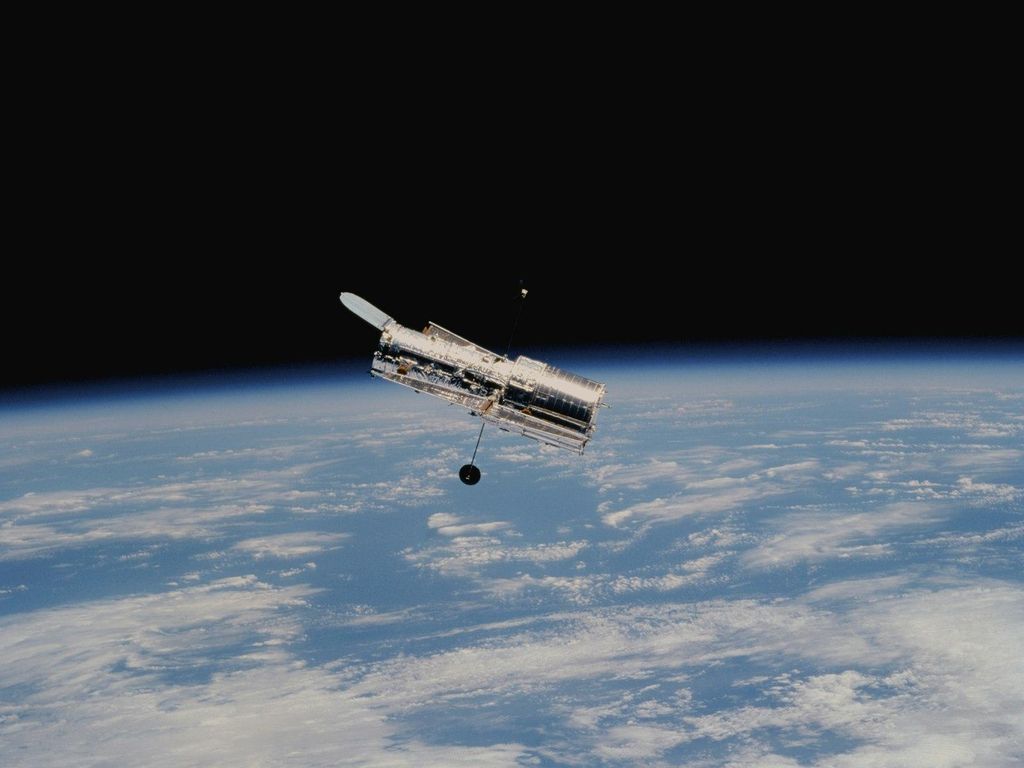
Launched in 1990, the Hubble Space Telescope has become one of the most influential astronomical observatories.
Its position above much of Earth's atmospheric interference allows it to collect detailed observations across different wavelengths of light.
Over its operational lifetime, Hubble has contributed to research involving distant galaxies, stellar formation, planetary systems, and the expansion of the universe.
The latest dwarf-galaxy investigation demonstrates the continuing value of its archival observations.
Rather than relying entirely on newly collected information, scientists used previously recorded Hubble images to examine stellar populations and reconstruct the development of individual galaxies.
This approach illustrates an important feature of modern scientific technology: data collected years earlier can become increasingly valuable as analytical methods improve and researchers develop new questions.
Combining Different Observation Technologies
The GLOW research project did not rely on a single instrument.
Researchers combined Hubble observations with information from NASA's retired Spitzer Space Telescope and ground-based radio facilities, including the Very Large Array and the Australia Telescope Compact Array.
Each instrument contributes different observational capabilities.
Optical observations provide information about stars and their distribution. Infrared observations can help examine material and processes that may be difficult to study using visible light alone. Radio observations provide additional information about gas and galactic environments.
Combining these sources creates a more comprehensive picture than any individual instrument could provide.
The process demonstrates how modern astronomy depends on coordinated observation systems, sophisticated data analysis, and collaboration among research institutions.
A Scientific Problem Hidden in the Data
The researchers examined 37 nearby dwarf galaxies and compared observed oxygen levels with theoretical expectations.
The results revealed that the galaxies contained significantly less oxygen than simulations predicted.
The missing material was linked to galactic winds driven by massive stars and supernova explosions.
These events release energy capable of pushing oxygen-rich material beyond a galaxy's gravitational boundaries.
The discovery matters because galaxy simulations depend on estimates of how much material remains available for future star formation.
If the models underestimate how much oxygen is expelled, their calculations of chemical development and galactic evolution may require adjustment.
The investigation therefore demonstrates how improved observations can identify limitations in existing computational models.
Why Data Analysis Matters
Astronomical technology generates enormous quantities of information, but the scientific value of that information depends on how effectively researchers interpret it.
The Hubble study involved examining individual stars, evaluating star-formation histories, and tracing the distribution of chemical elements.
That process required researchers to combine observational evidence with established physical principles.
It also required comparisons between actual measurements and computer-generated predictions.
The difference between the two revealed an important weakness in existing understanding.
For technology professionals, the research offers a useful example of how advanced instruments, data archives, computational modeling, and scientific collaboration work together to produce discoveries.
The Next Generation of Space Observation
NASA's future research programs are expected to expand the capabilities available to astronomers.
The Nancy Grace Roman Space Telescope is designed to survey large areas of the sky and identify astronomical objects that may be difficult to detect through narrower observations.
Researchers involved in the dwarf-galaxy investigation expect Roman to help locate faint and extremely small galaxies.
Hubble and the James Webb Space Telescope can then provide additional observations of selected targets.
These complementary capabilities illustrate the growing importance of combining wide-field discovery with detailed examination.
Roman can identify potential research targets, while other observatories can investigate their physical properties in greater depth.
Technology That Builds on Earlier Discoveries
The latest Hubble findings also highlight the long-term value of maintaining scientific infrastructure.
An observatory does not need to be newly launched to contribute to new research. Existing instruments can continue producing discoveries through improved analytical approaches and the availability of complementary technologies.
The collaboration between NASA, the European Space Agency, universities, and research institutions further demonstrates the international nature of modern space science.
Hubble's ongoing contribution provides a reminder that scientific progress frequently depends on building upon earlier observations rather than replacing every instrument with a newer system.
Understanding the Universe Through Better Evidence
The discovery of substantial oxygen loss in dwarf galaxies provides a clearer picture of how stellar explosions influence the development of smaller galactic systems.
It also demonstrates how technology supports the scientific process by allowing researchers to observe, measure, compare, and revise existing explanations.
As newer telescopes expand the range and detail of astronomical observations, researchers will have additional opportunities to investigate questions that remain unresolved.
The November announcement shows that the combination of established space technology, modern analysis, and coordinated research continues to produce meaningful advances in understanding the universe.

Men’s Insider Contributor
Nicole Warren
Covers entrepreneurship, career growth, and business trends with accessible insights for a broad audience.
This article features partner, contributor, or branded content from a third party. Members of the Men’s Insider editorial staff were not involved in the creation of this content. All views and opinions are those of the contributor alone.